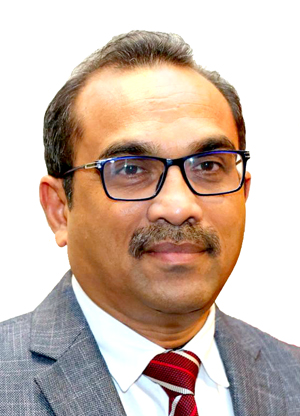
The Hon. Bimal Rathnayake - Minister of Transport, Highways and Urban Development and the Leader of the House of Parliament
Minister Bimal Rathnayake said the Adjournment Debate was intended to inform the public about the Government’s response to an external global war-related shock, including the President’s Rs. 100 billion relief package. He argued that the crisis was not domestically created and that the Government had to manage impacts on fuel, exports, banking, fertilizer imports, the Yala season and other sectors. He stated that from 28 February the President held discussions with exporters, banks, the Central Bank and the Ceylon Petroleum Corporation, followed by measures such as a moderate fuel price increase on 9 March, introduction of the QR code system on 15 March to reduce consumption, and the appointment of Cabinet committees.
Verbatim record (translated)
Machine-translated from Sinhala / Tamil / English¶ 01 Hon. Presiding Member, today’s Adjournment Debate was proposed by the Government side predominantly due to the special situation in the country arising from the global war context. Because of this ongoing war situation, yesterday the President also presented a Rs. 100 billion relief package. We sought this debate to enhance public understanding.
¶ 02 Let me relate a parable. Two young monks were on a journey when a band of thieves attacked, harassed them, and took their belongings. They returned to the temple. The learned chief monk asked what lessons they learned. One monk said, “We should not travel like this again.” The other monk said, “When we travel, such dangers can arise; therefore, we should be prepared for them.” The chief monk told the first, “The best thing for you is to leave the monastery,” because leadership is not for those who think one should travel only when the path is safe. He appreciated the second monk’s perspective.
¶ 03 Similarly, when governing a country, we must govern according to our policy framework while recognizing that unforeseen, external, agenda-outside events will occur and we must face them. If we think everything in our plan covers all possibilities, we will fail like the first monk. Listening to the Opposition—those who governed before—we feel they think like that first monk. They failed in governance, hence the people rejected them.
¶ 04 We need analysis: How did this situation arise? Is it created by domestic political, economic, and social management, or is it external? If unexpected problems arise on a journey, how do we manage them? We must correctly identify whether this is internal or external. It is obvious to anyone—except the few in front of me—that this is an external problem, a situation the whole world is facing, including countries at war and all others. Accepting it as external is essential; otherwise, the criticism is meaningless and only fills the Hansard.
¶ 05 We welcome being challenged if the blows land properly. Then we prepare better and reflect on our shortcomings. But when we come to play football and someone swings at random, it is irrelevant. Is Sri Lanka the only country where oil prices have risen? Is inflation rising only here? No. Even countries more developed than us face heavier burdens.
¶ 06 Let us come to the topic. It is an external problem, but a Government must be prepared. Natural disasters like cyclones can occur; one cannot say, “Cyclones don’t come here.” Therefore, a Government must always have a package ready. Likewise with the Middle East war. The question is how far we planned like the second monk to manage this external issue.
¶ 07 A two-week ceasefire has been announced. Small flare-ups may occur. I think even now a refinery in Iran has been struck. War is harder for the one at war than the one taking the blows. The ceasefire may extend beyond two weeks—but that is not for us to decide. After this, the world needs a political audit of the war, and Sri Lanka needs a political audit of our management of it, so the public can judge how strong and successful their Government has been in managing an unexpected shock.
¶ 08 The war began on 27 February. What did the Government do? From 28 February, the President held a series of discussions—with exporters, then with banks and the Central Bank. He met Ceylon Petroleum Corporation officials. In the first few days, we studied the evolving war situation and its sectoral impacts, including fertilizer imports, the upcoming Yala season, and tea. Our exports are affected, especially via the Strait of Hormuz; about 24 percent of our exports go to the US. We assessed the war’s developments and impacts with exporters and bankers.
¶ 09 We understood oil supplies would weaken, causing pressure on CPC and the Treasury, building debt. Therefore, on 9 March we raised fuel prices moderately—about Rs. 22 per litre then. On 15 March, recognizing the gravity, we introduced the QR code to curb consumption. The Cabinet appointed four committees, including one under the Prime Minister to assess the impact of Wednesday public holidays on the public service, and one under me on distributing fuel to essential services. By around 22 March, QR rollout reached about 90 percent. We also declared Wednesday holidays on 18 March, 25 March, and 1 April to reduce consumption.
¶ 10 Thus, we acted to manage external shocks—reducing fuel consumption while not allowing a mountain of debt to crush us. Relative to South and Southeast Asia, we have managed fuel well. If we had failed, there would have been massive protests. Today, people obtain fuel without issue.
¶ 11 On three-wheelers: not only three-wheeler drivers but all diesel users received relief—up to Rs. 100 per litre for diesel in certain categories. We had built an “optional” contingency pack because we had, through careful work over the past months, retained about Rs. 1.5 trillion in the Treasury. Without printing a rupee, we disbursed Rs. 50 billion for the Ditsa cyclone from that cushion.
¶ 12 We are not like those who ate the whole pack and fed only cronies while the people starved. Because we had an optional contingency pack, we could now provide Rs. 100 billion in fuel relief; in fact, the Rs. 100 billion yesterday comes on top of the ongoing Rs. 100 per litre diesel relief provided earlier through that contingency.
¶ 13 We have not simply waved hands. We did not waste time cursing President Trump; he is not giving Sri Lanka money. We managed politically. We always told people the truth. The President never promised unlimited fuel. He said supply constraints would last until 31 May.
¶ 14 There are blockades in Cuba; they speak of “zero-option,” yet face life. People are the most powerful force. We too tell our people: be prudent during the New Year, enjoy but be mindful. We have not painted a rosy picture.
¶ 15 Internationally, we have engaged China, India, and Iran—despite US financial sanctions complicating banking channels with Iran—and expanded ties with Russia as well. Should the war end in a month or two, we have already consolidated relations with major powers: Russia, China, India, Iran. Within a week, Russia’s Deputy Energy Minister and Deputy Foreign Minister will visit. We believe deepening ties with Russia—a producer of oil, gas, and fertilizer, and a market for our tea—will benefit our economy.
¶ 16 Thirdly, we have provided a relief package. One of the four committees is responsible for that. We saw the trajectory of the war; it will not drag on for years. Accordingly, we have given Rs. 100 billion in assistance to the people. Some in the Opposition, while calling it a “so-called relief package,” also ask us to expedite fertilizer assistance and advance paddy purchasing before the New Year—thereby acknowledging our measures.
¶ 17 In crises, a Government’s litmus test is how it navigates the people across a stormy sea. Ranil failed; Gotabaya failed; Maithripala failed on security. Through the Ditsa cyclone and this major crisis, we are managing.
¶ 18 We have not made this a single-issue paralysis. Work continues: this morning, the Fort Bus Terminal commenced operations after repairs; tomorrow with the Prime Minister we launch the Fort Railway Station modernization. Other ministries too continue. Relief to fishermen—including the former State Minister for Fisheries, who acknowledged his large boats receiving Rs. 150,000—has been provided, though some still claim nothing reached fishermen. We are managing matters politically and providing leadership, without frightening people or freezing normal work.
¶ 19 The people should evaluate not how much was given only, but how a Government navigates in a difficult, uncontrollable context. That is the political audit. Thank you.
Provenance
- Source
- Hansard, Wednesday, 8 April 2026 ·No. 23474 ·English daily/uncorrected Hansard
- Page · column
- not yet extracted — page/column anchors are not in the current dataset; the source PDF is the citable location.
- Permalink
/lk/speeches/1017
Cite as: The Hon. Bimal Rathnayake - Minister of Transport, Highways and Urban Development and the Leader of the House of Parliament. 10th Parliament, Parliament of Sri Lanka. Hansard, 8 April 2026. No. 23474. Politick, https://staging.politick.io/lk/speeches/1017