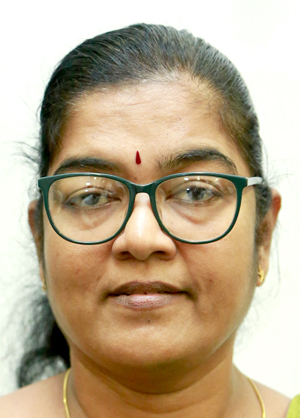
The Hon. (Mrs.) Saroja Savithri Paulraj - Minister of Women and Child Affairs
Minister Saroja Savithri Paulraj supported the 2025 Budget as a “people-centric” recovery Budget, highlighting Rs. 749 billion for social protection alongside salary increases, education assistance, health and nutrition programmes, transport, and other household-support measures. She cited specific allocations including Rs. 6,000 for 650,000 schoolchildren, Rs. 1.4 billion for sanitary pads, Rs. 12.5 billion for Thriposha and nutrition programmes, and funding for Suwaseriya, medicines, disability support, rehabilitation, and children in care. She also outlined measures for youth leaving care, housing and jobs for vulnerable young women, regional development in the North, East and Hill Country, rehabilitation of the Vattuvagal bridge, technical education, and action to secure the Rs. 1,700 daily wage for plantation workers.
Verbatim record (translated)
Machine-translated from Sinhala / Tamil / English¶ 01 Hon. Presiding Member, at the outset, this is a people-centric Budget. As outlined in our policy declaration, this is the Budget of recovery for “A Prosperous Country – A Beautiful Life.” In our first Budget we have allocated substantial funds for welfare, keeping faith with our promises. It covers all citizens—public and private sector workers, plantation workers, those needing assistance and protection, schoolchildren, university students, and residents of child protection institutions and other vulnerable groups.
¶ 02 In a Budget, salaries are one pillar and social protection another. In past Budgets, the largest increases were for national security—protecting the political elite and a few. That has now changed. This Budget allocates Rs. 749 billion to restore and strengthen social protection that covers everyone, surpassing education, health and transport where necessary.
¶ 03 Salary increases matter because the money flows through the whole society—household upkeep, children’s education, care for the sick, persons with disabilities, the elderly, nutrition to education—everything. Therefore, governments must plan to raise consumption capacity and ensure money circulates in a way that supports families, especially mothers who bear the burden of nutrition, education, health, transport and services. This Budget balances those burdens so families can save and invest in better food, education and health.
¶ 04 Specifically, in education: 650,000 beneficiary children will receive Rs. 6,000 for educational materials; funds are also allocated for textbooks through to school transport. There is a special Rs. 1.4 billion allocation to provide sanitary pads to girls. These ease the burden on families whose home budgets are stretched.
¶ 05 Health allocations are also critical. Beyond hospital development, staff remuneration and supplies, Rs. 12.5 billion is allocated for Thriposha and other nutrition programs, public health awareness, and for Clean Sri Lanka environmental measures to prevent disease spread. Funds are also provided for health research and for the Suwaseriya ambulance service. Ensuring quality medicines for women, children and the elderly is essential; the Government has now taken on this burden.
¶ 06 Thus, beyond salary increases, the Government is shouldering key household costs in health, education, transport and other services, helping macroeconomic stabilization through domestic demand.
¶ 07 On welfare: significant allocations are made for persons with disabilities, detainees, and children in certified schools, as well as drug prevention and rehabilitation—focusing not only on punishment but also reintegration. This is more than numbers: it is a socially responsible Budget aimed at uplifting living standards across all communities.
¶ 08 We will provide vocational guidance to youth over 18 coming out of care; for girls over 18 who marry, we will provide housing loans and jobs to empower them—so they do not remain vulnerable but become independent citizens.
¶ 09 For 76 years, we have not had a Budget that so clearly commits to raising the living standards of every community. This is a people’s Budget that keeps promises. It invests beyond Colombo—reaching rural areas and the Hill Country. Economic democratization must reach all; infrastructure must be fulfilled; and equality before the law must prevail. When these are met, we create the conditions for all communities to live together.
¶ 10 Development is no longer Colombo-centric; it now reaches villages and the North and East. Through this Budget we expect to rehabilitate the Vattuvagal bridge and bring industries and technology to those regions, lifting living standards. For Hill Country plantation workers, we will, together with employer federations, ensure the Rs. 1,700 daily wage.
¶ 11 Colombo was long the centre; now the Government is focusing on other regions, especially the Hill Country—school development and technical education facilities are included in this Budget. A government responsible to the whole people must uplift every life it touches.
¶ 12 In the North and East, allocations have been made for fisheries and agriculture livelihoods; we see funds for changes expected in the North.
¶ 13 No matter how high salaries rise, families cannot save if they must bear heavy education, health and transport costs. Therefore, the Government has assumed those burdens alongside salary increases, making this a people’s, mandate-driven Budget.
¶ 14 In early childhood development, we have identified autism and related conditions—hearing, speech, visual and neurological disorders—early intervention is vital. Funds are allocated to provide special early childhood development opportunities.
¶ 15 We have also seen the plight of about 5,000 children in custody or under supervision. They must be transported to and from courts safely, not alongside adult offenders. Accordingly, Rs. 250 million is allocated for transporting child detainees safely, and Rs. 500 million to expand the physical and human resource capacity of child protection institutions. Funds are provided to empower orphans and youth—after they finish studies and turn 18, to access NVQ-level training with Rs. 1,000 million allocated.
¶ 16 As a mother, I note that increasing university Mahapola and other student assistance is a great relief to women bearing household burdens—including food, lodging, connectivity and phone costs for children.
¶ 17 For our retirees, higher interest on deposits enables them to buy medicines, travel, worship and meet personal needs in dignity.
¶ 18 Finally, this is the first time since 2016—after nine years—that basic salaries of public servants have been increased, restoring dignity. As a government responsible to women and children who have borne heavy household pressures, we will continue to provide relief. This is a people’s Budget, a Budget of the renewal era that keeps promises and enables us to deliver at the village level. Thank you, Hon. Presiding Member.
Provenance
- Source
- Hansard, Tuesday, 18 February 2025 ·No. 1740219460090985 ·English daily/uncorrected Hansard
- Page · column
- not yet extracted — page/column anchors are not in the current dataset; the source PDF is the citable location.
- Permalink
/lk/speeches/104
Cite as: The Hon. (Mrs.) Saroja Savithri Paulraj - Minister of Women and Child Affairs. 10th Parliament, Parliament of Sri Lanka. Hansard, 18 February 2025. No. 1740219460090985. Politick, https://staging.politick.io/lk/speeches/104