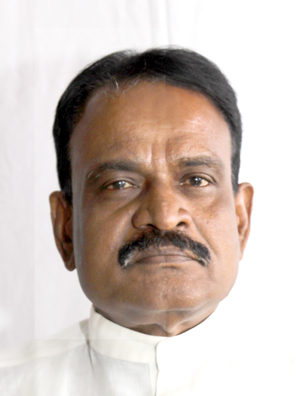
The Hon. Gnanamuththu Srineshan
Hon. Gnanamuththu Srineshan supported curbing excessive presidential privileges under the Presidents’ Entitlements (Repeal) Bill, but argued that the wider issue is the Executive Presidency itself, which he said has enabled authoritarianism, abuses under the Prevention of Terrorism Act, and impunity. He said reasonable pensions and security may be appropriate for former Presidents, but extravagant benefits are unacceptable during economic hardship and resources should instead support jobs, factories, and livelihoods, especially in the North and East. He also raised administrative concerns in the Eastern Province, urging action on volunteer teachers appointed late after wartime service, unemployment among traditional medicine graduates, reduced medical admissions under the district quota in Batticaloa, and significant vacancies in the Sri Lanka Education Administrative Service.
Verbatim record (translated)
Machine-translated from Sinhala / Tamil / English¶ 01 Hon. Deputy Speaker, I am pleased to speak on the Presidents’ Entitlements (Repeal) Bill. Sri Lanka adopted the Executive Presidency in 1978 under J.R. Jayewardene. Since then, eight Presidents have ruled. From a Tamil National perspective, we view this system as embedding authoritarianism into democracy. Post-1947 safeguards for minorities were eroded by the 1972 Constitution, and later the Executive Presidency compounded it.
¶ 02 Following the Presidency’s creation, the Prevention of Terrorism Act of 1979—an inhuman law—was enacted, turning innocents into accused and enabling impunity. Rather than only removing entitlements, our position is that the Executive Presidency itself should be abolished, as it enabled severe abuses, including mass graves in the North and East, and now even drug caches being unearthed. All parties in opposition decry the system but adorn it in power.
¶ 03 We do not oppose reasonable pensions and security for a President who genuinely served the nation. But extravagant privileges—armies of security personnel, palatial living, excessive pensions—are unacceptable when the country is bankrupt and ordinary people suffer. Excess must be curbed; leaders and people must not be separated by a chasm of privilege.
¶ 04 We recall grave incidents under this system: the Black July pogrom, the burning of the Jaffna Library, and many massacres—Saththurukondan, Kokkatticholai, Eastern University (Vettunimunai/Veeramunai), and more. Recently, in Mirisuvil, eight innocents, including a five-year-old, were murdered; though the perpetrator was sentenced to death, he was later pardoned by a President. Such acts show how excessive powers have been misused.
¶ 05 Privileges should go to the people: reopen factories in the North and East, create jobs, build livelihoods. “Too much of anything is good for nothing.” Limit excessive perks and invest in citizens.
¶ 06 Before I conclude: in the Eastern Province, volunteer teachers who filled vacancies during the war from 2005 were only appointed in 2019; some were over 50 at appointment and have barely 10 years to serve, yet have no special consideration. Similarly, traditional medicine—Ayurveda, Siddha, Unani—has produced graduates since 2017 without adequate employment. In Batticaloa, medical intake under district quota fell from 37 to 36, impacting opportunities. In the Eastern Province, SLEAS vacancies are about 316, with only 118 officers in post. Please act to fill these vacancies.
Provenance
- Source
- Hansard, Wednesday, 10 September 2025 ·No. 1758017450079419 ·English daily/uncorrected Hansard
- Page · column
- not yet extracted — page/column anchors are not in the current dataset; the source PDF is the citable location.
- Permalink
/lk/speeches/10722
Cite as: The Hon. Gnanamuththu Srineshan. 10th Parliament, Parliament of Sri Lanka. Hansard, 10 September 2025. No. 1758017450079419. Politick, https://staging.politick.io/lk/speeches/10722