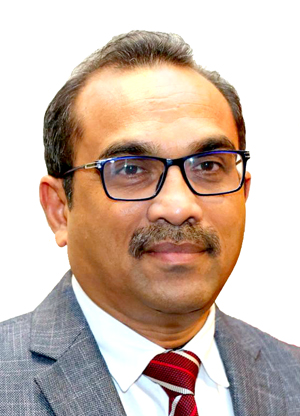
The Hon. Bimal Rathnayake - Minister of Transport, Highways, Ports and Civil Aviation and Leader of the House of Parliament
The Minister said the Government had allocated two days to debate the Batalanda Commission Report and framed the issue as part of a broader need for justice, reconciliation, and accountability for violence from 1971, 1987–90, and the Northern war. He criticized previous political leaderships for failing to properly conclude the Batalanda process, while stating that the current Government’s approach is reconciliation rather than revenge and that the JVP’s armed phase arose after prolonged repression and failed democratic avenues. He said the Government’s immediate priorities had been economic stabilization and restoring electoral democracy, with a later phase focused on coexistence, addressing disappearances, and healing wounds across communities.
Verbatim record (translated)
Machine-translated from Sinhala / Tamil / English¶ 01 Hon. Presiding Member, we, as the Government, requested two days for debate on the Report of the Commission of Inquiry into the illegal detention centres and torture chambers at the Batalanda Housing Scheme. Today is day one.
¶ 02 First, the responsibility to restore justice and moral balance in a country lies with all political leaderships. Without justice on this, Sri Lanka will never breathe easy.
¶ 03 This is not our Report; it was prepared under President Chandrika Kumaratunga’s Government. While respecting the officials who compiled it, I say candidly that although 1994’s political climate made the topic salient, Chandrika and her circle lacked the will to properly conclude it. It was used politically in both North and South, rather than to deliver justice. Even so, within their constraints, officials did achieve a measure of justice; we accept the Report as a principal document at hand.
¶ 04 We fought in a struggle—this was not a tea party. One camp was the UNP; the other, led by the JVP and progressive forces. The Report (p. 28) notes that forces within and outside Government openly opposed the Indo-Lanka Accord. The JVP was one camp; the UNP the other; and there were also outside actors—like the SLFP leadership then—who by day posed as patriots with the people, and by night served J.R. Jayewardene. They plundered amid the uprising. I have political anger at UNP torturers, but I have contempt for those political jackals who profited, then and now.
¶ 05 On reconciliation: How will you heal this wound—1971, 1988–90, and the two-decade war in the North? Do Members from Tamil parties today say how they will help heal it? Our approach is reconciliation, not vindictiveness. The Batalanda Report itself frames much of what happened as reaction to prior repression. Ask: what threat did the UNP face to justify 1981 Jaffna DC election malpractices or 1982 referendum? None comparable to 2022’s existential crisis for Gotabaya Rajapaksa. Black July 1983 changed Sri Lanka forever, sending millions into exile.
¶ 06 We maintain: the 1987–90 armed phase was a reaction, and delayed—our party did not take up arms lightly. We contested elections, wrote petitions, and sought democratic avenues. Our first comrade was abducted and killed in 1984 in Anuradhapura; we still did not pick up arms then. Weapons are not guitars—you cannot set them down at will; if you take them, you must cross the river fully. We were banned in 1983, endured repression, and only after the Indo-Lanka Accord and India’s actions, did we debate militarization of the struggle.
¶ 07 Today, we are a blessed party with many young MPs, including children of former UNPers and SLFPers; people from UNP, SLFP, Pohottuwa, TNA, and other parties have gathered to form the NPP/NMS (National People’s Power). We will not destroy even a thread of the reconciliation we have built. We are not speaking on Batalanda merely because of an Al Jazeera crash; we have a political management plan.
¶ 08 Our immediate priorities upon assuming office in an economic crisis and without a fresh electoral mandate were clear: stabilize the economy and re-establish democracy through timely elections. By 06 May this year, a large portion of that electoral timetable is achieved, with Provincial Council polls to follow. Our next phase, late this year or early next, is advancing coexistence and reconciliation—addressing 1971, 1987–90, and the Northern war.
¶ 09 Our approach is not to relitigate only 1989, but to build maximum reconciliation, correct our own shortcomings, and recognize pains across communities. We have forgiven much without revenge; eight of our comrades were killed during campaigns after 1994, yet we have not taken up even a stone in retaliation—not out of fear, but out of conviction.
¶ 10 We also recognize the profound pain of enforced disappearances. As Han Kang writes in “The Vegetarian,” and as local psychiatric studies show, families live “locked in grief.” A mother in Hambantota keeps her door open every night for a son who never returns; a sister in Kuliyapitiya ties a thread to a tree every birthday of her missing brother—25 or 26 threads now. Disappearance is a perpetual wound—North and South. An Adjournment Paper by a psychiatrist from Hambantota on this research is tabled. We must address disappearances urgently.
¶ 11 Therefore, we bring Batalanda not solely to punish, but with a larger aim: reconciliation. Yet reconciliation requires accountability for principal perpetrators. As in South Africa’s Truth and Reconciliation Commission, top-level perpetrators must face justice. We will pursue every legal avenue, with the best officials, to hold Ranil Wickremesinghe and other principal killers accountable. Such individuals must never again hold public office. We will proceed lawfully—establishing a probe committee as the President will announce by the next debate day—and inform the Attorney General, moving judicially. We will deliver justice to mothers who keep doors open, in the North, South, and elsewhere.
¶ 12 Thank you.
Provenance
- Source
- Hansard, Thursday, 10 April 2025 ·No. 1747999742032122 ·English daily/uncorrected Hansard
- Page · column
- not yet extracted — page/column anchors are not in the current dataset; the source PDF is the citable location.
- Permalink
/lk/speeches/11359
Cite as: The Hon. Bimal Rathnayake - Minister of Transport, Highways, Ports and Civil Aviation and Leader of the House of Parliament. 10th Parliament, Parliament of Sri Lanka. Hansard, 10 April 2025. No. 1747999742032122. Politick, https://staging.politick.io/lk/speeches/11359