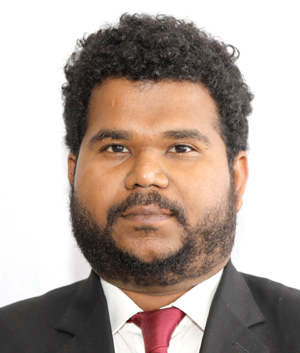
The Hon. Thanura Dissanayake
Thanura Dissanayake said the Government’s priority in the power and energy sector is to stabilize supply, prevent recurring fuel and electricity breakdowns, and reduce costs through renegotiated renewable power purchase agreements. He said Sri Lanka should aim to export surplus renewable power only after achieving self-sufficiency, lower tariffs, and a coherent long-term plan. He outlined allocations for religious-place solar schemes, Colombo transmission upgrades including the Kerawalapitiya-Port underground line, and Rs. 20.7 billion in capital expenditure, while calling for strategic handling of Trincomalee oil tanks, petrol shed expansion, and investor agreements to maximize national benefit.
Verbatim record (translated)
Machine-translated from Sinhala / Tamil / English¶ 01 In the Committee Stage debate on the Power and Energy Ministry, many views were presented. Our priority is stabilizing the sector and preventing the recurring breakdowns in power and fuel. We must reduce energy costs. Some past PPAs—for wind and solar—carried high unit prices; we have reduced from US cents 6.69 to cents 5.97 for some standard offers. Without bringing tariffs down, we cannot build a competitive economy.
¶ 02 Energy exports are possible. India already has exchanges for inter-state trading. Our region’s demand will grow, and our renewable endowment can exceed domestic needs. We should aim to export surpluses—but only after stabilizing our system, increasing generation, achieving self-sufficiency, and lowering prices. That requires a long-term strategic plan, not just a list of projects. We inherited many projects; we will fix shortcomings and complete those that benefit Sri Lanka. For religious places’ solar, we have allocated funds in this Budget and will complete it soon.
¶ 03 We are strengthening Colombo’s transmission backbone. With industrial growth and Port City development, Kerawalapitiya–Port underground transmission is allocated Rs. 7 billion. System-wide transmission upgrades are funded through capital votes.
¶ 04 On Trincomalee tanks: we opposed some earlier agreements due to unfair terms. If restructured to maximize national benefit—like Sampur solar where price reductions were secured—we support it. Sri Lanka’s geography gives natural advantages; they must be harnessed with coherent plans.
¶ 05 On petrol sheds: opening many new sheds without margins and volumes to sustain them does not help. Some earlier promises to allow more sheds created expectations. Now we must be strategic; excessive proliferation could harm the sector. Claims that investors are “leaving” are often due to expected windfalls being curbed by our renegotiations for fairer prices. Credible investors will still come for fair, mutually beneficial deals.
¶ 06 We have reduced renewable PPA rates in recent months through proper negotiation. If we cannot buy at fair prices, the consumer will never see benefits. We must address root causes, negotiate responsibly, and ensure the country and people benefit.
¶ 07 We have allocated Rs. 20.7 billion in capital expenditure to stabilize the sector, move strategically, and, in time, export surplus power.
Provenance
- Source
- Hansard, Monday, 3 March 2025 ·No. 1742268353096939 ·English daily/uncorrected Hansard
- Page · column
- not yet extracted — page/column anchors are not in the current dataset; the source PDF is the citable location.
- Permalink
/lk/speeches/18379
Cite as: The Hon. Thanura Dissanayake. 10th Parliament, Parliament of Sri Lanka. Hansard, 3 March 2025. No. 1742268353096939. Politick, https://staging.politick.io/lk/speeches/18379