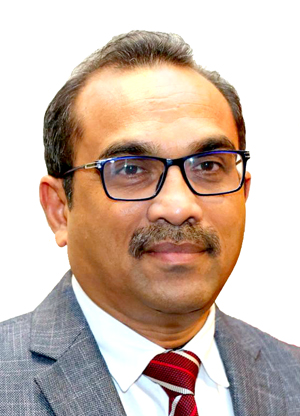
The Hon. Bimal Rathnayake - Minister of Transport, Highways, Ports and Civil Aviation and Leader of the House of Parliament
Minister Bimal Rathnayake said education reform should be treated as a long-term national project shaping Sri Lanka’s society and workforce by 2050, and therefore must proceed through broad consultation rather than as a finalized proposal imposed on Parliament. He argued that a White Paper or framework should be debated widely, including beyond Parliament, because issues such as school structures, cultural and religious education, and subject combinations affect all communities and families. He proposed that all children learn the core values of the main religions to promote mutual respect, and cited the need for flexible subject combinations such as Combined Mathematics with Biology to meet modern industry requirements.
Verbatim record (translated)
Machine-translated from Sinhala / Tamil / English¶ 01 Hon. Presiding Member, I am pleased to join this adjournment debate to inform both the public and Members about how education reforms should proceed.
¶ 02 Throughout my time in Parliament, I have focused on education. Education reforms affect everyone now and shape the country for 20 to 30 years. In truth, education reform impacts a country’s DNA. In 20 or 30 years, what will Sri Lanka be, what kind of people and institutions will we have, what mindsets — education influences all that. We are born homo sapiens; education is the primary tool that makes us cultural humans. Today, we are deciding what our people will be in 2050 — a weighty decision. Unlike building a road with visible results in a year, education decisions yield tangible outcomes after 15–20 years. Increasing life expectancy or similar outcomes also take years. Infrastructure ministries can show quick results; education cannot. Hence, this is about changing the nation’s DNA and must be done seriously and consultatively, not hastily. Curriculum updating has been a mandatory process even under past governments.
¶ 03 Hon. Presiding Member, we are drafting the master plan for Sri Lanka’s people — what kind of country we will have in 25 years, what kind of children will grow up in Kilinochchi or Mullaitivu. This requires a wide dialogue. Everyone feels they know education; that is fine, because it matters to all. But we must proceed seriously.
¶ 04 You can write a neat road manual; but as the WIPO Global Award-winning inventor Nadeesha Chandraseana told me yesterday, Sri Lanka lacks a national sanitation policy. Some documents do not require huge consultation. Education is different; it needs a serious consultative process. If the Minister presented a finished document, the Opposition and we could only move amendments; adding substantive content later is hard. That is why we present a White Paper or special document first — a basic frame. The President today outlined what we aim to do: by 2050, what kind of Sri Lankans and workers we want — Sinhala, Tamil, Muslim, Burgher, Malay — respected, well-rounded people. Will we keep segregated school systems, continuing separate boys’ and girls’ schools? Many of us studied in single-sex schools and know their limitations. We live in one country; such structural questions must be decided through consultation. Debate should extend beyond Parliament to local authorities; nothing is hidden. Every parent watches what affects their children. For many working-class families, education remains the highway to mobility; if the economy expands with opportunities, the pressure on education may ease, but for now it is immense.
¶ 05 On White Papers: in 1981, Ranil Wickremesinghe brought a “White Paper” whose pages were white but objectives black. The same year the Jaffna Library was burned and Black July followed soon after. The author of that White Paper, now the only one in the present Cabinet who helped create Black July, later lost in court over the Aragalaya. We are not doing anything undemocratic; we will not force through reforms. This is a consultative process; let even the Colombo Municipal Council debate it.
¶ 06 Some proposals: People want their children to grow in their own culture and faith; that is fine. Within one nation, however, we must live with diversity. I request the Prime Minister to design a religious education programme where every child learns the essence of the four or five main religions here. I should appreciate Ramadan as much as Poson, and a Muslim child should understand Christmas as a Christian does. Understanding breeds respect, not fear.
¶ 07 Next, subject combinations. A Sri Lankan scientist working in Denmark told me his medical equipment company wanted Sri Lankan students who have done Combined Mathematics and Biology — because making, say, an inhaler requires both biological and engineering understanding: anatomy and mechanics. Industries need such combinations. While we produce humane citizens — not chauvinists or misogynists — we must also align talent with industry needs.
¶ 08 On AI: it will not end everything. It will remove some traditional jobs but create many others — like bridges removed ferrymen’s jobs but created far more. We must think accordingly and provide practical subject combinations.
¶ 09 In the Hill Country and districts like Ratnapura, many students lack schools offering Science and A/L streams. Please address this through the reforms.
¶ 10 A good practice in Germany: after A/L, students get a year to volunteer in their chosen field and are given around 500 Euros earmarked for cultural exposure — films, theatre, museums. If we cannot give that much, even Rs. 5,000 or 10,000 would help children experience culture — not to buy snacks, but to watch a film or a play, or visit the Peradeniya Botanical Garden. We need both cultural and physical life. Help children become culturally enriched humans; help girls move without fear. Women’s safe mobility radius is far smaller than men’s; we must change that.
¶ 11 If possible, include pathways to complete a first degree by around age 22. Not everything can be done at once, but by around 2035 we might achieve it.
¶ 12 Finally, about teachers’ workload: in France, as I understand, a teacher typically does only four or five periods a day, leaving gaps to prepare and to speak to students; here teachers often teach seven straight periods with only one break. When designing timetables and syllabi, create systematic space for lesson preparation in-school, in addition to at-home prep.
¶ 13 I believe the President set the right direction today. The upper middle class may be small but its voice is large; yet we must answer to the vast majority — around 4.3 million children. We are building a modern, beautiful Sri Lanka. The greatest responsibility for shaping our DNA rests with the Education Ministry under the Hon. Prime Minister. We wish you well and, from the Opposition, urge everyone to engage constructively, not regressively.
¶ 14 Thank you.
Provenance
- Source
- Hansard, Thursday, 24 July 2025 ·No. 1754026625097211 ·English daily/uncorrected Hansard
- Page · column
- not yet extracted — page/column anchors are not in the current dataset; the source PDF is the citable location.
- Permalink
/lk/speeches/18642
Cite as: The Hon. Bimal Rathnayake - Minister of Transport, Highways, Ports and Civil Aviation and Leader of the House of Parliament. 10th Parliament, Parliament of Sri Lanka. Hansard, 24 July 2025. No. 1754026625097211. Politick, https://staging.politick.io/lk/speeches/18642