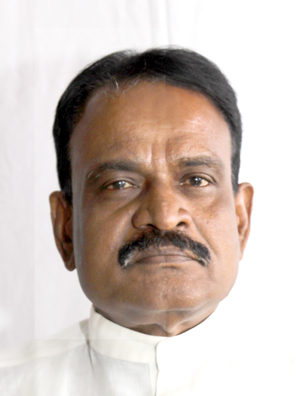
The Hon. Gnanamuththu Srineshan
Gnanamuththu Srineshan supported education reform but urged that it address past shortcomings by promoting sustainable development, national unity, moral values, employability, and stronger technical, scientific and mathematical education. He called for equitable teacher allocation, especially for difficult schools in Batticaloa’s Paduvankarai areas, and emphasized shortages in mathematics, science, IT and vocational subjects that limit students’ subject choices. He also proposed stronger qualifications and training for preschool teachers, reconsideration of the Grade 5 scholarship exam, prompt recruitment of B.Ed. graduates without additional diploma requirements, and swift release of O/L re-correction results. He stressed that reforms should be practical and ensure students leave school with vocational skills as well as certificates.
Verbatim record (translated)
Machine-translated from Sinhala / Tamil / English¶ 01 Hon. Presiding Member, an education reform is necessary. After 77 years of independence, we are bringing this change. While previous governments introduced reforms, had they truly worked, we would have achieved sustainable development and national unity, and created more technical employment locally. They fell short in some ways.
¶ 02 This reform must be designed to produce sustainable development, foster unity among communities, uphold moral values, provide employability, and strengthen technical, scientific and mathematical knowledge. I trust your actions will align with this.
¶ 03 Regarding equity and equal opportunity: we divide schools into national and provincial, and categorize rural schools as ordinary, difficult and most difficult areas. Resource allocation is not equitable. Students below the poverty line and those in difficult areas cannot choose subjects according to aptitude because necessary teachers are lacking.
¶ 04 In my district of Batticaloa, in Paduvankarai areas—Panchena, Pavarkodichena, and Narpaduvattai—schools are in most difficult zones. There are shortages of teachers for mathematics, science, IT and vocational subjects. When reforming curricula, teacher resources must be allocated equitably so students can choose subjects according to their abilities. I say this as someone who has been a teacher, lecturer and education officer.
¶ 05 Early childhood education is the foundation. Preschools are critical; a child first meets a teacher there. A language teacher must also understand the child—meaning preschool teachers should have psychology and pedagogy training. But many preschool teachers have only studied up to Grades 8-10 or O/L, with uncertain training. Without psychological and pedagogical knowledge, they may inadvertently harm children. We must ensure proper qualifications and training.
¶ 06 The Grade 1-5 scholarship exam makes 90% of children unhappy to make 10% happy, as one professor wrote. We should reconsider it within the reform.
¶ 07 On Bachelor of Education (B.Ed.): B.Ed. graduates study pedagogy, psychology and philosophy of education for four years and are well-suited to teach. As quickly as we recruit diploma-trained teachers from colleges of education, we should also promptly appoint B.Ed. graduates as teachers without requiring them to do additional diplomas, to avoid wastage of time and skills.
¶ 08 Regarding the G.C.E. (O/L): results are out and students have applied for re-correction. Re-correction outcomes must be released quickly so students can choose their A/L streams—science, mathematics, arts or commerce—without delay.
¶ 09 Please give me one more minute, Sir.
¶ 10 The Education Minister is experienced, holds a doctorate, and has teaching experience. The reform must deliver sustainable development and preserve moral values. Students leaving school should not just carry certificates and wander in search of jobs; they should have vocational skills—tailoring, agriculture or another trade—developing knowledge, skills, attitude and practice. Previous methods like SE, NCGE, HNC came and went without lasting. This reform must ensure equity and opportunity for all and be practically implementable so the country advances with sustainable development. Thank you.
Provenance
- Source
- Hansard, Thursday, 24 July 2025 ·No. 1754026625097211 ·English daily/uncorrected Hansard
- Page · column
- not yet extracted — page/column anchors are not in the current dataset; the source PDF is the citable location.
- Permalink
/lk/speeches/18647
Cite as: The Hon. Gnanamuththu Srineshan. 10th Parliament, Parliament of Sri Lanka. Hansard, 24 July 2025. No. 1754026625097211. Politick, https://staging.politick.io/lk/speeches/18647