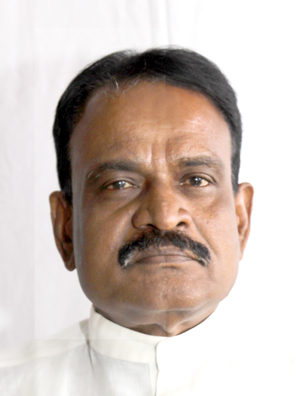
The Hon. Gnanamuththu Srineshan
Hon. Gnanamuththu Srineshan urged the Government to implement the digital economy agenda beyond urban areas by ensuring reliable telecommunications and internet access in rural and difficult areas, including parts of Batticaloa District and the North. He called for school and university curricula to be aligned with digital economy, science, technology and labour market needs, highlighting graduate unemployment and shortages of science, mathematics and ICT teachers in disadvantaged areas. He also requested practical measures to create employment for unemployed graduates and raised separate education-related concerns, including delays in Grade 5 Scholarship cut-off marks and appointments of acting principals who passed the Class 3 Principals’ Service exam.
Verbatim record (translated)
Machine-translated from Sinhala / Tamil / English¶ 01 Hon. Presiding Member, today’s debate concerns the Ministry of Digital Economy and matters of science and technology. Digital economy is a vital part of the modern economy—indeed, its backbone. Therefore, we must develop the digital economic framework.
¶ 02 In developed countries, digital economic systems have been successful and are advancing. We should adopt a robust digital framework. The digital economy creates new jobs and market opportunities; enables new forms of work; reduces travel burdens through online services and remote work; and supports progress not only in industry and agriculture but also in health, transport and many other sectors.
¶ 03 However, this must not be confined to cities. Seventy percent of our people live in rural areas. We must extend digital services to rural communities. Even today, some areas lack adequate telecom facilities. In Batticaloa District—Kattumurivu, Poolakkadu, Paavarkodichchenai and others—and in the North, places like Analaitivu face difficulties obtaining telecom connectivity. If we are serious about the digital economy, we must first ensure reliable internet infrastructure in such locations.
¶ 04 There is a saying, “He who learns computers wins the times.” We have passed from the hunting age to the agricultural age to the industrial age; now we are in the information technology age. We cannot ignore the digital economy. The Government has introduced a Ministry for this, but implementation is key. Roll this out across all parts of the country so people benefit. From schools onwards, provide education aligned to the digital economy.
¶ 05 Human resources today are not trained in line with current job markets. Many graduates—arts, external and internal—stand on the streets seeking jobs. Some told me, “Sir, we completed our degrees and have waited for years.” This shows curricula are not aligned with market needs. Universities should assess emerging opportunities, then teach and award degrees accordingly, so graduates can find jobs. Otherwise, when employers say degree content is not job-relevant, who designed those curricula?
¶ 06 As we pivot, even arts or other streams should include subjects aligned with the digital economy and IT literacy, so that upon graduation they can access jobs in government or private sectors—or even self-employment—without pressuring the state. Yet today, even science and engineering graduates struggle to find jobs. One engineering graduate from a very difficult area told me he has been waiting two years for employment. We must adapt our human capital to the needs of industry.
¶ 07 There is also a shortage of teachers in science, mathematics and ICT, particularly in difficult and most-difficult areas. Students end up choosing arts or traditional subjects due to availability, sometimes securing high grades and entering universities, only to face little employability afterwards. Therefore, from secondary level, ensure adequate science, technology and ICT education, to build requisite skills.
¶ 08 We should move from purely theoretical teaching to more practical approaches in science and technology so students gain competencies, not just memorized knowledge. Also, for unemployed graduates, take initiatives to create suitable job opportunities in line with the digital economy, and prevent frustration that could push youth toward unwanted activities. We have seen in our history how poorly directed economic structures led to unrest. Now, with a strong mandate and as a National People’s Power government, handle these matters correctly and provide opportunities to graduates.
¶ 09 I also wish to raise issues beyond this subject due to public concern. The Grade 5 Scholarship results are out, but schools are waiting for cut-off marks to grant admissions; delays prevent students from participating in competitions and exams. Please expedite.
¶ 10 Next, the Class 3 Principals’ Service exam has been held and many have passed, yet 384 acting principals still await appointment, despite court orders. Please address this.
¶ 11 On railways: Previously, a Batticaloa–Colombo train departed at 7.00 p.m. and reached around 3.50 a.m. Now departure is at 6.15 p.m. and arrival 8.30 a.m., causing many inconveniences, disrupting office timings. Similarly, from Colombo, the 11.00 p.m. departure now arrives at 8.30 a.m., affecting officials and travelers to Ampara and elsewhere. Please restore the earlier timetable. Also, sleeper coaches have been removed—only 1st and 2nd class seats remain—causing hardship for long-distance travelers. Kindly reconsider.
¶ 12 Finally, in implementing your digital economy and science and technology initiatives, ensure benefits reach poor rural communities as well. I conclude. Thank you.
Provenance
- Source
- Hansard, Tuesday, 11 March 2025 ·No. 1743759139093629 ·English daily/uncorrected Hansard
- Page · column
- not yet extracted — page/column anchors are not in the current dataset; the source PDF is the citable location.
- Permalink
/lk/speeches/19034
Cite as: The Hon. Gnanamuththu Srineshan. 10th Parliament, Parliament of Sri Lanka. Hansard, 11 March 2025. No. 1743759139093629. Politick, https://staging.politick.io/lk/speeches/19034