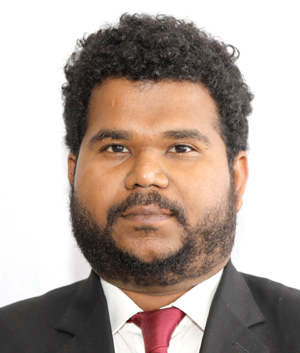
The Hon. Thanura Dissanayake
Hon. Thanura Dissanayake defended the current power sector restructuring, stating that the proposed companies would remain 100 per cent state-owned under the Treasury Secretary and did not amount to CEB privatization. He argued that restructuring is needed to lower electricity tariffs by reducing generation, transmission and distribution costs, while addressing under-investment in the network and expanding renewable energy toward the 70 per cent target by 2030. He also said electricity and other prices had been stabilized or reduced under the Government, citing lower bills for low-consumption households, and stated that IMF-related measures were being negotiated in a manner suited to Sri Lanka.
Verbatim record (translated)
Machine-translated from Sinhala / Tamil / English¶ 01 [5.11 p.m.]
¶ 02 Hon. Presiding Member, the power sector is vital in any country and must function independently. Earlier restructuring plans differed significantly from current ones. Previously, there were vague plans to split into 12 companies, with no clarity on ownership or privatization. Now, these new companies will be 100% state-owned and stably vested in the Treasury Secretary. Despite the label “private limited,” they are not private or a CEB privatization. Creating fear among employees to destabilize the country is regrettable.
¶ 03 Why are these changes needed? To reduce tariffs. To do so, we must reduce generation costs—covering generation, transmission, and distribution. Transmission has been under-invested compared to generation; distribution too is weak. We either invest massively or find a way, even amid stabilization, to upgrade systems while protecting affordability and independence.
¶ 04 We target 70% renewable energy by 2030. Until recently progress was very slow, and solar adoption was ad hoc at high unit prices. We must reduce fuel use and expand solar and other renewables properly. The Motion says prices of essentials and electricity have sharply risen; that was in the past. In our 10 months we have stabilized and reduced many prices—and electricity too.
¶ 05 For low-use households (0–30 units), the maximum monthly bill that was Rs. 280 on 16.07.2024 was reduced to Rs. 195 from 18.01.2025; after a slight upward revision on 12.06.2024 it became Rs. 215—still below the original Rs. 280. Similarly for other slabs. We are moving forward under negotiated IMF understandings that suit the country, not trapped by prior templates.
Provenance
- Source
- Hansard, Thursday, 25 September 2025 ·No. 1759483897051145 ·English daily/uncorrected Hansard
- Page · column
- not yet extracted — page/column anchors are not in the current dataset; the source PDF is the citable location.
- Permalink
/lk/speeches/20196
Cite as: The Hon. Thanura Dissanayake. 10th Parliament, Parliament of Sri Lanka. Hansard, 25 September 2025. No. 1759483897051145. Politick, https://staging.politick.io/lk/speeches/20196