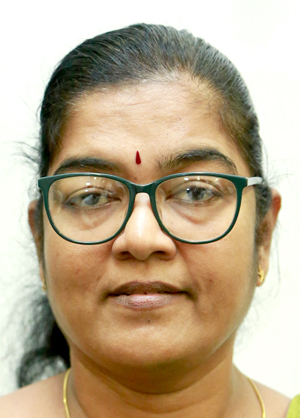
The Hon. (Mrs.) Saroja Savithri Paulraj - Minister of Women and Child Affairs
Moving the Penal Code (Amendment) Bill for Second Reading on behalf of the Minister of Justice and National Integration, the Minister said the amendments seek to prohibit all forms of violence against children, particularly corporal punishment, in line with constitutional obligations, the UN Convention on the Rights of the Child, and Sri Lanka’s 2024 international commitment to end corporal punishment. She cited rising and recurring complaints under Section 308A and examples of abuse in homes, schools and care settings, stating that physical, psychological, verbal or sexual violence used for “correction” or discipline would be criminalized except in good-faith emergencies. She said the reforms would strengthen child protection, align policy with international guidance, and be supported by a multi-sectoral mechanism under the National Child Protection Authority, while emphasizing that legal change must be accompanied by cultural, educational and institutional change.
Verbatim record (translated)
Machine-translated from Sinhala / Tamil / English¶ 01 Hon. Deputy Speaker, on behalf of the Minister of Justice and National Integration, I move that the Bill now be read a Second time.
¶ 02 Today we debate the Penal Code (Amendment) Bill. There is a clear need to amend the Penal Code to eliminate all forms of violence against children, in particular to end corporal punishment. Chapter VI, Article 27(13) of the Constitution states:
¶ 03 “The State shall promote with special care the interests of children and youth, so as to ensure their full development, physical, mental, moral, religious and social, and to protect them from exploitation and discrimination.”
¶ 04 Sri Lanka acceded in 1990 to the UN Convention on the Rights of the Child and in 1992 introduced a National Children’s Charter. Looking at where and how children face violence—at home, school, probation homes, in custody, children’s homes, on the streets, bus stands, and even among peer groups—complaints under Section 308 of the Penal Code on cruelty to children have been recorded as follows: 905 (2010), 1,156 (2011), 1,516 (2012), 2,030 (2013), 2,160 (2014), 2,317 (2015), 2,180 (2016), 2,144 (2017), 413 (2018), 2,237 (2020), 2,471 (2021), 2,096 (2022), 2,238 (2023), 1,950 (2024), and 1,126 up to 31 July 2025.
¶ 05 Recent incidents show varied forms of cruelty: for example, a father shoving rice into a child’s face; children left with relatives when mothers work abroad facing physical, psychological neglect and abuse over time; incidents within schools are also reported increasingly.
¶ 06 Under Article 19 of the CRC: “States Parties shall take all appropriate legislative, administrative, social and educational measures to protect the child from all forms of physical or mental violence … while in the care of parent(s), legal guardian(s) or any other person who has the care of the child.”
¶ 07 Thus, acts of violence while in care must be criminalized, which we now do through these amendments. Sri Lanka also endorsed, at the 2024 Bogotá Global Ministerial Conference to End Corporal Punishment of Children, the commitment to take necessary legal and institutional measures to end all corporal punishment of children.
¶ 08 Accordingly, any physical, psychological, verbal or sexual violence “for correction” or as a disciplinary method will be prohibited. The child’s full rights are vested in the jurisdiction of the relevant District Judge; neither parents, teachers, nor relatives may inflict violence or cruelty on a child.
¶ 09 Within education, Circular 12/2016 (dated 29.04.2016) prohibits corporal punishment in schools while safeguarding discipline. Expert consensus shows corporal punishment causes physical pain, psychological trauma and can lead to future antisocial behaviour, school dropout, aggression, anxiety, and poor academic achievement. Research reveals adverse outcomes outweigh any perceived benefits.
¶ 10 Therefore, Section 308A is strengthened. A new 308A(1)(a) provides that, except in good‑faith emergencies, any act using physical force, however minimal, causing pain or discomfort as a “punishment” or “correction” constitutes an offence.
¶ 11 Our objectives are: - Legal protection to ensure a child is free from physical and psychological abuse and denial of fundamental rights. - Policy and legal reforms aligned with UNICEF guidance since 1946 to protect children from all forms of violence including child labour, child marriage and exploitation, through education, health and social protection frameworks.
¶ 12 Sri Lanka has multiple institutions—schools, health sector, courts, police, National Child Protection Authority (established by Act No. 50 of 1998), and the Department of Probation and Child Care Services—but they have often worked in silos. Since last May, we have instituted a multi‑sectoral mechanism under the supervision of the NCPA to coordinate prevention and response.
¶ 13 Law alone cannot change society; long‑term cultural, educational and economic development is needed, alongside mutual respect. We must build a society where adults and children respect each other, and where self‑discipline replaces fear of punishment.
¶ 14 A “child” is anyone under 18. Historically, before reforms, those under 12 were treated as children, leading to abuses such as child domestic labour and child marriage. Now, under international standards, all under 18 are children and must be protected from all forms of violence—physical, psychological, verbal and sexual.
¶ 15 As a teacher for over 20 years, I affirm that corporal punishment breaks a child’s spirit. Physical wounds are visible; the breaking of the heart is not. Parents and teachers bear responsibility. Legal sanctions address visible harm, but we must also guard against the unseen psychological damage.
¶ 16 We must preserve children’s entitlements: a healthy environment, clean water, and a livable ecology for future generations. Another challenge we highlight today is the abuse associated with narcotics.
Provenance
- Source
- Hansard, Wednesday, 24 September 2025 ·No. 1759815459006615 ·English daily/uncorrected Hansard
- Page · column
- not yet extracted — page/column anchors are not in the current dataset; the source PDF is the citable location.
- Permalink
/lk/speeches/20833
Cite as: The Hon. (Mrs.) Saroja Savithri Paulraj - Minister of Women and Child Affairs. 10th Parliament, Parliament of Sri Lanka. Hansard, 24 September 2025. No. 1759815459006615. Politick, https://staging.politick.io/lk/speeches/20833