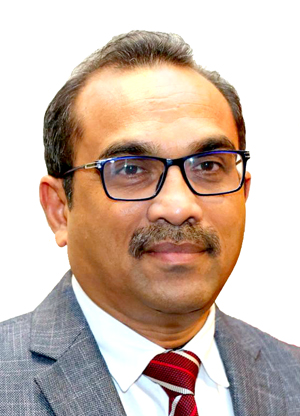
The Hon. Bimal Rathnayake
Hon. Bimal Rathnayake addressed the procedure for oral questions under Standing Orders 31, 32 and 33, emphasizing that supplementary questions are limited to the Member who placed the original question unless that Member consents to another Member asking one. He argued that this restriction preserves the scope of the original question and protects the rights of the Member who submitted it. He urged adherence to the Standing Orders and to the Chair’s rulings where parliamentary practice is involved.
Verbatim record (translated)
Machine-translated from Sinhala / Tamil / English¶ 01 Mr. Speaker, firstly, Standing Orders 31, 32 and 33 deal with Questions. Standing Order 32(1) provides the procedure for oral questions—calling the Member whose name the question appears under, and that Member rises and asks the question. Standing Order 33(1) then, read with 32, confines the two supplementaries to “the Member” concerned with that question. By practice, the original Member may consent to another asking one of the supplementaries, but absent such consent, another Member cannot step in. Supplementaries must arise from the original question and answer; allowing an unknown second Member without the original’s consent risks departing from the scope. This also protects the rights of the Member who placed the original question. We should abide by the Standing Orders, and, where practice applies, by the Chair’s ruling.
Provenance
- Source
- Hansard, Thursday, 8 May 2025 ·No. 1748426168056758 ·English daily/uncorrected Hansard
- Page · column
- not yet extracted — page/column anchors are not in the current dataset; the source PDF is the citable location.
- Permalink
/lk/speeches/21823
Cite as: The Hon. Bimal Rathnayake. 10th Parliament, Parliament of Sri Lanka. Hansard, 8 May 2025. No. 1748426168056758. Politick, https://staging.politick.io/lk/speeches/21823