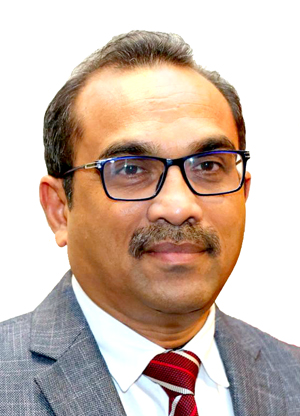
The Hon. Bimal Rathnayake - Minister of Transport, Highways, Ports and Civil Aviation and Leader of the House of Parliament
Bimal Rathnayake responded to the Adjournment Motion on human rights by citing the 12 August UN High Commissioner for Human Rights report as evidence of a shift toward a more inclusive national identity and of early government action on economic and social rights. He highlighted the inherited economic crisis, including food insecurity and child malnutrition, and pointed to measures such as tax threshold increases, VAT removals on some foods, higher health and education allocations, increased Aswesuma funding, and meeting the IMF social safety net target. He also cited the Proceeds of Crime Act, the National Anti-Corruption Plan, and recent corruption convictions and investigations as signs of action against corruption, arguing that human rights concerns must be considered alongside economic recovery and accountability efforts.
Verbatim record (translated)
Machine-translated from Sinhala / Tamil / English¶ 01 Hon. Deputy Chairperson of Committees, I wish to make some observations in this debate on the Adjournment Motion moved by the Hon. Sivagnanam Shritharan. First, we thank him for initiating this discussion— not only on the general human rights situation in Sri Lanka but also, in particular, on issues in the North, the East, and among the Malaiyaha community. A core problem in outlying regions— be it Monaragala, Sabaragamuwa, Uva or elsewhere— is that Colombo hears, sees and feels less. Let me, therefore, briefly ground this debate in the United Nations Human Rights Council document of 12 August, which I will use to frame my remarks.
¶ 02 Listening to earlier interventions, I wondered: are some who once feared war now more afraid of peace and reconciliation? Let me cite the UN High Commissioner for Human Rights (UNHCHR) Report, page 3:
¶ 03 “[The High Commissioner] has observed a noticeable shift in discourse among Government actors toward a more inclusive vision of national identity, although this has not yet resulted in concrete deliverables.”
¶ 04 Even our Prime Minister said as much. Some refuse to see the first light of dawn and dwell only on darkness. I ask our colleagues from the North and East: if there is even a small glimmer, acknowledge it. If you will not hear it from us, see what the High Commissioner himself has recorded— a shift toward an inclusive national identity.
¶ 05 On what country we inherited 10 months ago, page 3 records:
¶ 06 “More than half of all households turned to coping strategies such as skipping meals, eating less preferred food or limiting portion sizes, and over a quarter (27 per cent) of households consumed inadequate diets. These have contributed to an increase in malnutrition for underweight children under five, from 12.2 to 17 per cent, and stunting among children under five, from 7.4 to 10.5 per cent between 2021 and 2024.”
¶ 07 That is the country we received: a population skipping meals and children suffering malnutrition. The Report also notes:
¶ 08 “The Government raised the personal income tax threshold from 1,200,000 rupees to 1,800,000 rupees, offering relief to those from lower socio-economic backgrounds, and removed value-added tax on certain food items, such as fresh milk and yoghurt.”
¶ 09 What Geneva sees, some in our Opposition refuse to acknowledge. If not the light, at least see its shadow.
¶ 10 On budgetary allocations, the Report states:
¶ 11 “The health and education sectors received allocations of 1.83 and 1.88 per cent of GDP, reflecting increases from the previous year, and steps towards the National People’s Power’s election promise of allocations of three and six per cent respectively.”
¶ 12 On social safety nets, point 12 records:
¶ 13 “Sri Lanka’s IMF programme sets an indicative floor target of 0.7 per cent of GDP for social safety net spending … [which] was neither met in 2024 nor 2023. The Government reported that it achieved this target in March 2025 and increased budgetary allocation under the Aswesuma programme to 237 billion rupees ($790 million) in 2025.”
¶ 14 Without economic rights, talking about human rights is hollow.
¶ 15 On the Attorney-General’s Department and corruption, the Report at point 14 notes:
¶ 16 “Some important steps have been taken to address long-standing corruption concerns. In April 2025, the Proceeds of Crime Act was passed, strengthening Sri Lanka’s ability to recover illicit assets at home and abroad. Also in April 2025, the Commission to Investigate Allegations of Bribery or Corruption launched the National Anti-Corruption Plan …”
¶ 17 Some now decry “witch-hunts” while sitting with those who looted the state and bankrupted the economy. The High Commissioner notes:
¶ 18 “Separately, two former ministers for sports and trade were found guilty of misappropriating state funds and given lengthy prison sentences, with other ministers being arrested and investigated for corruption. Such steps have an important signalling value on the Government’s continuing commitment to tackle these deep-rooted problems.”
¶ 19 Today, former President Ranil Wickremesinghe was arrested. I tabled, months ago, documents stating that after an overseas visit he went to the UK for his wife’s convocation at state expense. Some now say, “The law is equal, but not for the big men.” That is unacceptable.
¶ 20 Time does not permit me to cover the whole Report. We still have work ahead, including reform of the MMDA, which must be community-driven, with buy-in from Islamic religious and political leaders— internal dynamics, not external imposition.
¶ 21 On the NGO Secretariat, as Hon. Ananda Wijepala noted, the Cabinet with the President has adopted a policy; significant administrative changes will follow in the coming months. We have not newly obstructed NGO registrations.
¶ 22 On the Northern Province land settlement Gazette: with the participation of all MPs from the North and East and the Hon. Prime Minister, it has been withdrawn for discussion and rework. The Environment Minister today said hundreds of thousands of acres previously used by people have been identified for release nationally; about a hundred thousand acres identified, many already regularized. The State Minister of Lands, Dr. Susil Ranasinghe, toured Mullaitivu, Kilinochchi, Vavuniya and Mannar with officials; he will elaborate.
¶ 23 On the OMP: around 15,000 complaints; we acknowledge investigations are not yet concluded. The High Commissioner’s point 35 notes that the Mannar Magistrate’s Court in November 2024 dismissed a police bid to restrain commemoration events. The right to mourn loved ones predates the nation-state.
¶ 24 On investigations, point 39 records expedited probes into emblematic cases such as D.P. Sivaram (2005). In January 2025 the Attorney-General moved to fast-track 11 serious criminal prosecutions; in March 2025 two former Army intelligence members were detained for the abduction and assault of journalist Keith Noyahr (2008).
¶ 25 The High Commissioner himself, departing Sri Lanka on 26 June, tweeted:
¶ 26 “Leaving Sri Lanka with much hope. Sensed a real desire from Government and civil society to break from entrenched identity politics. In a divided world, my wish is for Sri Lanka to become a story of peaceful coexistence, of understanding others - where diversity is embraced as a strength.”
¶ 27 We must build trust among communities. The issue is less formal equality than how we tolerate and accommodate differences. We have built a Government bringing together Sinhala, Tamil, Muslim, Malaiyaha, Catholic and Christian communities. What must change?
¶ 28 Hon. Sivagnanam Shritharan began by framing Sri Lanka as having two nations, Sinhala and Tamil. I do not wish to inflame that. We speak of Sri Lankans. First, acknowledge plural languages; second, the historic place of Muslims— a millennium here, as scholars like Lorna Dewaraja have chronicled. Without accepting these realities, how do we build unity? Development and reconciliation are two sides of the same coin: one face is equality and dignity; the other is development.
¶ 29 On 1 September, the Government completes one year. The President’s first development projects began in Jaffna— a 16,000-acre coconut development in Mullaitivu, the wartime Vattuvakal bridge redesigned with Tamil cultural elements, seed farms in Pallei, and an international sports complex for Mandaitivu to commence by September or October. On Mannar’s wind power and sand mining, concerns were raised about EIAs. The President convened the Catholic Church, civil society, citizens’ movements, and MPs including Rishad Bathiudeen, Jegadeeswaran, Upali Samarasinghe, and Ramalingam. He ordered the sand mining stopped and extended public hearings for wind power by a month. We are a listening Government.
¶ 30 In the North, the people gave the highest vote to Ilankai Thamil Arasu Kachchi; we do not seek to erode that mandate but to develop the North with increased allocations, while healing past wounds— the top face of the coin— and fostering respect and acceptance.
¶ 31 To our Tamil people: are today’s checkpoints, police summons, and security environment more threatening than 11 months ago? Save for a Mannar town checkpoint focused on narcotics, most checkpoints have been removed after analysis. No country guarantees 100 percent security, but fear due to ethnicity must not be present.
¶ 32 On Muththayan Kattu: do not feed nationalist politics with communal narratives. Police brutality against detainees is a systemic issue beyond ethnicity; we have seen Sinhala victims as well. Our task is to reform politicized institutions and hold errant officials— of any ethnicity— accountable.
¶ 33 On mass graves: investigations are proceeding— notably in Colombo and Chemmani— with increased exhumations (from 30 to 138 remains identified at Chemmani since we took office). Forensic capacity must be strengthened; we are assisting.
¶ 34 On Indian returnees: three recent cases highlighted legal gaps. Amendments are being prepared by Hon. Ananda Wijepala; Hon. Harshana Nanayakkara has briefed UNHCR. Meanwhile, a temporary halt to such transfers is under consideration. Our issue is not policy-driven nationalism but remnant officials acting with bias; we will confront this without fear.
¶ 35 From 2010-2015, Tamil communities faced grave nationalist repression, including white vans and abductions. Those who now align with EPDP did not do so then; I ask what has changed if we are allegedly worse than prior regimes. Do not chase nationalist fodder. See today’s Opposition benches: where are their leaders in this debate? We respect this Motion; our leaders are here. We will build a society where no one is discriminated against for being Sinhala, Tamil, Muslim, Burgher, or Malay— protecting cultural rights and freedoms.
¶ 36 Prometheus defied Zeus to bring fire to cold humanity; we too will challenge the status quo to help people. Let us move from the past to the present; judge us by what we do now. Gain the ability to explain your constitutional preferences to the South without fear; we, too, speak candidly to the North. The people of North, East, and South have accepted us. Represent Sri Lanka— all of it.
Provenance
- Source
- Hansard, Friday, 22 August 2025 ·No. 1756894696039492 ·English daily/uncorrected Hansard
- Page · column
- not yet extracted — page/column anchors are not in the current dataset; the source PDF is the citable location.
- Permalink
/lk/speeches/22356
Cite as: The Hon. Bimal Rathnayake - Minister of Transport, Highways, Ports and Civil Aviation and Leader of the House of Parliament. 10th Parliament, Parliament of Sri Lanka. Hansard, 22 August 2025. No. 1756894696039492. Politick, https://staging.politick.io/lk/speeches/22356