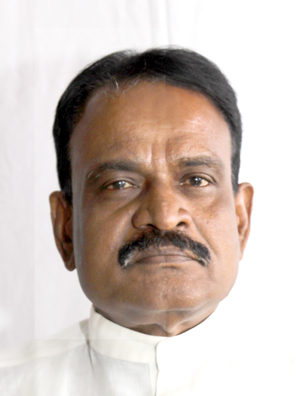
The Hon. Gnanamuththu Srineshan
Gnanamuththu Srineshan supported education reforms but urged that they be undertaken carefully to avoid repeating past discriminatory or flawed policies affecting Tamil-medium students. He called for equal opportunities for Sinhala- and Tamil-medium learners, greater engagement of qualified Tamil-speaking academics and Hindu scholarly institutions in curriculum and religious content, and stronger proofreading and review of Tamil-medium textbooks. He also proposed government responsibility for preschool teacher training and supervision, and emphasized science, technology, research, ICT, mathematics, and vocational education, particularly in disadvantaged and estate-sector schools, to improve employability and develop knowledge, attitudes, skills and practice.
Verbatim record (translated)
Machine-translated from Sinhala / Tamil / English¶ 01 Hon. Deputy Chairperson of Committees, I am pleased to participate in this Adjournment Debate on education reforms. Reforms are needed for the country. Even when we attempt reforms carefully, mistakes can happen. Historically, after Independence, there were many missteps: the 1956 Sinhala Only Act adversely affected Tamil-medium students; in 1971, university admissions standardization caused harm; the 1972 First Republican Constitution entrenched educational discrimination between Sinhala and Tamil media; the burning of the Jaffna Public Library in 1981 was a blow to education. So our educational history includes discriminatory practices. Reforms must ensure equal opportunities for Sinhala- and Tamil-medium students.
¶ 02 Religion-related extremism has deeply affected the country. Advisors to politicians have even been appointed as religious advisors for Hindu affairs. There are institutions capable of giving scholarly advice on Hinduism—the Saiva Siddhanta Sabha, Saiva Paripalana Sabha, Vivekananda Sabha, Arumuga Navalar Sabha, and the Hindu Maha Sabha. Yet they have not been adequately engaged. Some priests who were political advisors previously have been made advisors on Hindu matters, which is a shortcoming. There are eminent scholars like Professor Padmanathan; I am not aware that his advice has been obtained. When things are done in haste, shortcomings occur.
¶ 03 We agree that reforms should promote development, national unity, and equal education for all. At the National Institute of Education (NIE), Sinhala- and Tamil-medium officials have historically had language-based deficiencies across subject areas—history, drama and theatre, science, mathematics, etc. We must ask how many competent Tamil-speaking academics are engaged to advise on these subjects. Instead of academics, religious leaders who are priests are being consulted; they may be invited as ceremonial guests but may not have deep academic expertise. Taking such advice on religious content risks errors.
¶ 04 When Tamil-medium books are printed, are there enough Tamil-proficient experts to proof and review? Otherwise, errors in books can become major problems—as seen with the Grade 6 English textbook issue now dominating the national conversation. If drafts are carefully reviewed and errors removed before printing, many problems can be pre-empted.
¶ 05 Though time is short, let me note: the education pipeline runs from preschool to university. Although preschool is outside the formal school system, the Government should take full responsibility—teacher training, appointments, teaching-learning processes, and supervision—so children develop appropriately. If we neglect preschools, education suffers. The Government should train and professionalize preschool teachers.
¶ 06 According to McDougall’s principles, there is inquiry- and collection-based learning. From an early age, students should be guided through scientific and technological education to engage in research. Only then can we produce scientists domestically. Otherwise, as an importer of devices, we lose much foreign exchange. Therefore, prioritize research, science, technology, ICT and mathematics education in schools.
¶ 07 Please, give me one more minute, Madam.
¶ 08 In many difficult areas, including estate sector schools, research, technical and vocational education are insufficient. When students complete A/Levels and leave, the system does not equip them to obtain employment. Beyond knowledge, we must shape attitude, skills and practice—KASP: knowledge, attitude, skill, practice. Our country has emphasized knowledge but not sufficiently changed attitudes, skills, or practice. Hasty reforms increase the likelihood of mistakes. We need thorough, error-free reforms—then we, students, teachers, and the world will accept them. Do it properly, without haste. I conclude with that request.
Provenance
- Source
- Hansard, Thursday, 22 January 2026 ·No. 23203 ·English daily/uncorrected Hansard
- Page · column
- not yet extracted — page/column anchors are not in the current dataset; the source PDF is the citable location.
- Permalink
/lk/speeches/22487
Cite as: The Hon. Gnanamuththu Srineshan. 10th Parliament, Parliament of Sri Lanka. Hansard, 22 January 2026. No. 23203. Politick, https://staging.politick.io/lk/speeches/22487