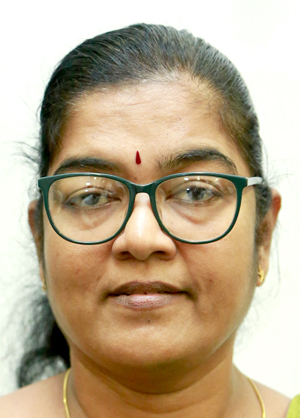
The Hon. (Mrs.) Saroja Savithri Paulraj - Minister of Women and Child Affairs
The Minister justified the increase in excise tax on imported electric vehicles as a revenue-raising measure adopted in the context of economic recovery, arguing that it avoids placing additional taxes on essential goods. She said limited vehicle imports would help revive the motor trade, provide opportunities for eligible importers and permit holders, and generate funds for development, welfare, and state priorities while protecting foreign reserves through import limits. She also defended the Government’s collective responsibility for difficult decisions, stated its willingness to correct mistakes, and rejected allegations of corruption or deliberate harm to the public.
Verbatim record (translated)
Machine-translated from Sinhala / Tamil / English¶ 01 Hon. Presiding Member, today we are discussing the matter of increasing the excise tax on the importation of electric vehicles. I have several specific points to make. In truth, when we took over the country, the economy had collapsed. Therefore, as a new Government, we have had to take certain decisions in rebuilding the country.
¶ 02 Especially, with the objective of increasing state revenue, our decisions have had to place greater weight on imports. Rather than taxing essentials, food items, or daily consumer goods in a way that hurts people, we considered how to responsibly increase revenue and develop the state without burdening the public. Therefore, instead of imposing unlimited taxes on daily consumer goods, as part of the process of reviving the economy, we reluctantly had to decide to increase import taxes, in particular on imported vehicles.
¶ 03 In the recent past, vehicle imports to Sri Lanka were suspended. Though that suspension has been eased to some extent with limits, we have reopened a restricted opportunity to import vehicles. Within this framework, we have had to increase the tax percentage on electric vehicles.
¶ 04 We look for two main outcomes: first, by granting limited permission to import vehicles again, those engaged in the motor trade — whose businesses had been stalled — can revive their industry. Secondly, those who have the need and capacity to import electric vehicles are given the opportunity to do so.
¶ 05 Through permitting such imports and subsequent sales, the Government can increase tax revenue. The revenue generated by this tax increase will fund development, social welfare, and the country’s key development targets. Therefore, we must explain this decision to the public responsibly.
¶ 06 This particular import tax approach is to increase state revenue. Previously, even though vehicle permits were issued to public officers, the ability to actually import vehicles under those permits was not available. We hope, subject to limits, to provide that opportunity to permit holders in the future, as they have long been unable to utilize their permits. Public servants understand our effort and why these difficult steps are being taken.
¶ 07 We also recognize the need to stabilize our dollar reserves. Therefore, import limits and criteria are necessary to manage this process. Stabilizing foreign remittances and increasing tax revenue are obligations before a Government that has taken over a broken economy. We clearly state that while many attempts may be made to pull down or misinterpret our development program through false narratives, we know the weight of our responsibility. We will not trample the public mandate. Regarding the recent protests, I can personally and responsibly say that no one acted alone; politics is collective. Our journey, decisions, victories, and defeats are collective — achieved by our brothers and sisters in even the remotest villages with immense dedication.
¶ 08 Therefore, no position we hold is personal; all are shared responsibilities. As a Government, we take responsibility for every decision we make. We will not take any decision that oppresses women, children, or the public. We will be accountable.
¶ 09 I say with affection and responsibility to the people: we can slip; words can go wrong; but we are ready to correct mistakes and bear responsibility. However, we state responsibly that we have not deliberately wronged this country, stolen public funds, violated the law, or coerced the law. We have not engaged in fraud or corruption.
¶ 10 [Hon. Saroja Savithri Paulraj]
¶ 11 We have not participated in destructive politics that ruined the economy. We say again, anyone may correct us.
¶ 12 In the past days and weeks, many people, with goodwill, came forward to correct us. We are ready to accept and rectify. We also recognize the cunning political attempts to exploit events. The right and responsibility to correct us belong to our beloved people who gave us the mandate. We are open to them at any time. But those who looted and ruined this country have no moral right to point fingers at us.
¶ 13 Hon. Presiding Member, to strengthen the rule of law, and to build protective mechanisms for women and children, many civil organizations and activists have given us proposals. We listen attentively and accept constructive criticism. We are open to consensus with the people on any decision.
¶ 14 At this time, I wish to state:
Provenance
- Source
- Hansard, Tuesday, 20 May 2025 ·No. 1749010823009957 ·English daily/uncorrected Hansard
- Page · column
- not yet extracted — page/column anchors are not in the current dataset; the source PDF is the citable location.
- Permalink
/lk/speeches/25911
Cite as: The Hon. (Mrs.) Saroja Savithri Paulraj - Minister of Women and Child Affairs. 10th Parliament, Parliament of Sri Lanka. Hansard, 20 May 2025. No. 1749010823009957. Politick, https://staging.politick.io/lk/speeches/25911