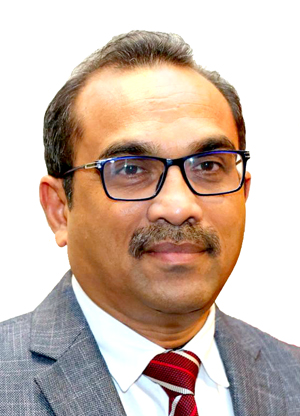
The Hon. Bimal Rathnayake - Minister of Transport, Highways, Ports and Civil Aviation and Leader of the House of Parliament
Minister Bimal Rathnayake defended the National People’s Power Government’s first Budget, arguing that its first 100 days should be assessed on political discipline, social stability, and fiscal management as well as on the Budget text. He said problems such as passport queues, shortages of rice, coconuts and salt, the port container backlog, the Grade 5 scholarship paper leak, high prices, and organized crime stemmed from past mismanagement, and outlined steps taken or planned to address them. He emphasized ethical governance, citing prompt responses to controversies over qualifications and statements, and rejected claims that allocations such as the Rs. 100 million Thambuththegama Railway Station feasibility study were personal projects. He also highlighted improved parliamentary performance, including timely answers to oral and Standing Order 27(2) questions, and said the Government was maintaining elections and parliamentary discipline without misuse of state resources.
Verbatim record (translated)
Machine-translated from Sinhala / Tamil / English¶ 01 Hon. Presiding Member, we are at the end of the Second Reading debate on the first Budget of the National People’s Power Government. We are pleased that we have been able to implement our long-held ideas and policies. For decades our generations believed we should rebuild this country with our own hands. With a people’s mandate for our policy framework, we have presented this Budget and, after March 21, we will build this country with our own hands. It is, in a sense, the realization of the dreams of our late comrades.
¶ 02 Let us seek truth from facts, not from volume or soundbites. Managing a country requires both economics and politics—one cannot function without the other. We have been in office for about 100 days. Therefore, we should evaluate not only the Budget text and speech, but how we governed politics, society, and the economy during these 100 days.
¶ 03 Three areas: 1) Political management and discipline; 2) Social stability and discipline; 3) Economic management and fiscal discipline.
¶ 04 On recent issues raised by the Opposition: the passport queues; rice, coconuts, and salt shortages; the Port container backlog; the leak of Grade 5 Scholarship exam papers; rising prices; and recent organized crime activity.
¶ 05 None of these arose from decisions we took; they stem from past mismanagement. We have substantially resolved the passport issue—people can now get passports without queues, though some work remains. On rice, coconuts, and salt, we acknowledge there was an issue not of our making; we are managing and planning so that by next November these issues will not recur. On the Port container backlog, we intervened and reduced it with interim and long-term solutions underway. Regarding the Grade 5 Examination, both the President and Prime Minister worked hard; the court-endorsed solution matched the PM’s proposal—thus fairly addressing the disadvantage to children without re-sitting papers.
¶ 06 Prices have eased though still high relative to incomes; inflation is down—this is a fact, reflected in increased sales at major retail chains, especially in outstations.
¶ 07 On organized crime, it thrived with political patronage in the past. Today, crime groups are “restless” because they cannot establish connections with the Government. We ask those involved to desist and rebuild their lives; otherwise, within the law, we will suppress it as necessary. But policing alone cannot solve it; social measures are required.
¶ 08 Two moral issues arose: qualifications for office, and a name-related matter. We reacted promptly—our Speaker candidate withdrew; our chief organizer retracted the statement before anyone else asked. These were not legal issues but moral ones. We aim to uphold political ethics and discipline. The people now scrutinize our ethics at a very high standard, which we welcome.
¶ 09 On political management, there have been no credible allegations of coercion or corruption against us in these 100 days. The President spoke for 2 hours 45 minutes—he did not say “my proposals,” he said “our proposals.” This is a team effort—Cabinet, State Ministers, and MPs move in one direction.
¶ 10 A point about the Thambuththegama Railway Station feasibility study allocation of Rs. 100 million: the President was not aware; it originated as a Departmental technical suggestion linked to moving vegetable freight via rail. After examining Dambulla and road links, the Department proposed Thambuththegama due to its developed economic centre. It was not a personal pet project.
¶ 11 Parliamentary performance: in the past 100 days, 105 oral questions were asked; 94 were answered the same day; only 11 were deferred and are now answered. There are no pending oral answers. Under Standing Order 27(2), 10 questions were asked by party leaders—8 answered; the PM answered all 8 questions put to her. Time management has improved; Parliament is not a circus or a stage for video clips—we are raising its quality and keeping elections on schedule without misuse of state resources or media.
¶ 12 On past disruptions: I served on the Select Committee on the chili powder attack. We reviewed hours of footage, identified culprits, but the then-Speaker was not allowed to present the Report. Today, by contrast, even small issues get huge scrutiny; we welcome that.
¶ 13 This Budget is grounded in social and economic science, focusing on the vulnerable: children in homes and in detention; rehabilitation to prevent relapse; support to persons with disabilities—including autistic children and their families. We are signaling: “We see you; we will stand by you.”
¶ 14 We are not creating a security state with checkpoints everywhere. Suppression alone is not the answer. Our approach is social stabilization—like Iceland’s evidence-based youth measures—directed support to keep youth in sports and away from drugs and alcohol. We must use science to resolve social problems.
¶ 15 On the Opposition’s critiques: despite harsh rhetoric, substantive content is thin. A PR line was fed to paint this as an IMF, neoliberal Budget. But judge us by our Manifesto and the Budget Estimates—not snippets of speeches. We are working to implement 80–90% of our manifesto commitments in year one.
¶ 16 Specifics: - Public sector salaries: claims we did not raise them are false; salaries are paid on April 10—verify then. - VAT: the President already announced forthcoming VAT relief in the economic statement; distinguish between the Budget speech and the Estimates. - Debt service: claims of Rs. 2,950 billion for 2025 are conflating totals; payments in 2025 for prior debt are Rs. 1,600 billion.
¶ 17 Revenue is already improving in Customs, Excise, and Inland Revenue—not through “high tech,” but by ending impunity. Those who once evaded taxes through political connections no longer can.
¶ 18 Independent assessments: - Verité Research polling shows 62% approval for the Government in February; 55% say the economic outlook is improving; sentiment on the economy is increasingly “good/excellent.” - The Public Finance Committee Report (92 pages) notes post-2022 recovery: GDP growth, declining inflation, exchange rate stability, and better-than-IMF debt metrics—debt-to-GDP at 98.7% versus the IMF target of 108.8%. It projects 3–5% growth, aided by accommodative monetary policy, lower rates, investment, tourism, and large infrastructure—while acknowledging global vulnerabilities.
¶ 19 We are practicing frugal governance. Chairs of major SOEs and key entities—BoC, People’s Bank, NSB, Sri Lanka Insurance, SLT, Hilton, Litro, Waters Edge, Sathosa, Lotus Tower, Lanka Hospitals, SriLankan Airlines, Lanka Coal, BOI, Port City, EDB—serve pro bono. Several senior advisers to the President also serve voluntarily. We leverage national talent, not expense accounts. Yet when we propose to cut the costs of former Presidents and MPs, some rush to defend those perks.
¶ 20 Committee representation: we expanded Opposition representation across numerous Committees—Standing Orders, House, Ethics and Privileges, COPE, COPA, Public Petitions, High Posts, Backbenchers’ Committee, and even Ministry Advisory Committees—creating 213 opportunities for Opposition participation.
¶ 21 In conclusion: our path is steady and calm. We are committed to professional, honest, collective governance—aware of our shortcomings but focused on building an economy where people can live with dignity, feed their families, clothe their children, and travel freely; a country all children—from Peduruthuduwa to Akuressa—can proudly call theirs. This is our life mission. If the Opposition wishes to govern in ten years, follow this path and compete on better ideas. Otherwise, they will remain where they are.
¶ 22 Thank you, Hon. Speaker.
Provenance
- Source
- Hansard, Tuesday, 25 February 2025 ·No. 1741258607035810 ·English daily/uncorrected Hansard
- Page · column
- not yet extracted — page/column anchors are not in the current dataset; the source PDF is the citable location.
- Permalink
/lk/speeches/26689
Cite as: The Hon. Bimal Rathnayake - Minister of Transport, Highways, Ports and Civil Aviation and Leader of the House of Parliament. 10th Parliament, Parliament of Sri Lanka. Hansard, 25 February 2025. No. 1741258607035810. Politick, https://staging.politick.io/lk/speeches/26689