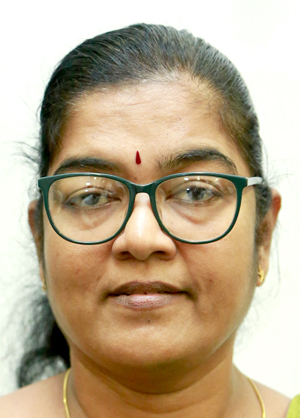
The Hon. (Mrs.) Saroja Savithri Paulraj - Minister of Women and Child Affairs
The Minister supported the 2026 Budget as a continuation of the Government’s stabilization and welfare-oriented programme, citing 2025 gains in growth, inflation control, interest rates, reserves, remittances, fiscal discipline, and revenue administration. She outlined 2026 priorities including inclusive growth, export diversification, debt sustainability, domestic production, rural poverty reduction, and digitalization. She highlighted measures such as attendance-linked top-ups for estate workers, public service and pension increases, women’s empowerment funding, concessional loans for overseas Sri Lankans, a Wages and Pensions Commission, health-sector strengthening, higher Mahapola scholarships, and Rs. 4,290 million for 2,000 plantation-sector houses under Indian-assisted housing efforts.
Verbatim record (translated)
Machine-translated from Sinhala / Tamil / English¶ 01 Hon. Presiding Member, today, 13 November, is special—it recalls the Ilmaha Viru Commemoration, a day that symbolizes the struggles of working people in Sri Lanka. As someone who came to Parliament representing working people, I am happy to speak today.
¶ 02 While debating this Budget, I wish to reflect on the 2025 Budget we presented last year. In this second Budget reading, within our policy framework I intend to discuss our Government’s economic strategy. A national Budget is not merely an income-and-expenditure paper. It is a yardstick that reflects improvements in living standards, progress toward development goals, social and cultural indicators, and people’s basic needs and rights, with forecasts for the coming year. Our 2025 Budget functioned as a people’s welfare-oriented Budget anchored on physical development. The 2026 Budget is based on empowering domestic production, raising living standards through economic development, and pursuing development targets.
¶ 03 As the President said, we took over at a moment when the economic foundation had cracked—not merely “the economy collapsed,” but when the very foundation was split. That is not a simple phrase; such a break strikes national development hard. There was prolonged macro instability across sectors, fiscal imbalances, and structural inefficiencies, all due to governance failures of that era. Within one year of this new political transformation we have achieved major victories. Our stabilization program was not easy.
¶ 04 In the first half of 2025, growth reached 4.8 percent; inflation returned to positive territory; Treasury bill rates declined restoring financial stability; the exchange rate stabilized; worker remittances increased; and official reserves rose to about USD 6 billion. We believe FDI will increase on this stability. Our first strategic step was maintaining fiscal discipline; second, transparent and accountable public financial management. We strengthened domestic revenue mobilization and began digitalizing revenue administration. Thus, we have made 2025 a year prioritizing public welfare.
¶ 05 In 2026, we will promote local industries and production, and meet export and investment targets, ensuring benefits flow down to rural people through strengthened transmission mechanisms per our policy decisions.
¶ 06 Strategic aims of the 2026 Budget include: inclusive and sustainable growth; higher income via export diversification; ensuring debt sustainability; strengthening the productive economy; eradicating rural poverty; and promoting digitalization.
¶ 07 We proposed wage increases for estate workers. Regrettably, some oppose this not as a privilege but as an empowerment for the most underprivileged: Rs. 200 per day from the State to encourage attendance and uplift living standards, alongside the companies’ Rs. 200. If a worker attends 25 days, that is Rs. 5,000 from the Government; together with the companies’ Rs. 200 per day, a total Rs. 10,000 monthly attendance-linked top-up. This is a significant State measure. Attempts to legally challenge it or complain to anti-corruption bodies are anti-people.
¶ 08 Next, we propose public service and pension increases; Rs. 240 million plus an additional Rs. 200 million for women’s empowerment; concessional loans for overseas Sri Lankans; establishing a Wages and Pensions Commission; strengthening health and health education; and increasing the Mahapola scholarship to Rs. 10,000 for university students—showing that beyond development targets this Budget reaches welfare goals for 2026.
¶ 09 Especially for Malaiyaha (plantation) people, housing projects under Indian assistance are underway. From our side, we have allocated Rs. 4,290 million for 2,000 houses.
¶ 10 I emphasize: mandated by the people, our transformational Government will modernize governance, reestablish rule of law, centralize services on people, and ensure that the economic achievements reach grassroots communities. Due to these reforms, within one year we have restored fiscal management, macro stability, and social assurance. Growth of 4.8 percent in H1 2025 exceeded expectations. We all saw how the April 2022 default cost us a decade—social justice lost, welfare fallen, people’s household economies hit. It was forecast to take ten years to recover to pre-default status. Yet we are confident that by the end of this year we will return to that level.
¶ 11 Social protection and human capital development are core. We have updated and expanded Aswesuma; revalidated beneficiary lists; increased payments to the elderly, disabled, and CKD patients; and increased Mahapola for university students. For Aswesuma beneficiary families’ schoolchildren, we provide grants to purchase books and supplies—ensuring growth benefits flow to those in real need.
¶ 12 We recognize the need to reform and modernize the public sector. We are implementing a three-phase public sector salary increase—one phase already given; the next in 2026. We will fill critical vacancies to address manpower gaps and roll out public sector digitalization. We aim to establish an efficient, service-oriented, attractive public service.
¶ 13 To rescue our children long victimized by narcotics and organized crime, we have launched a comprehensive action plan to break drug supply chains, weaken distribution networks, implement education and rehabilitation, and expand employability pathways.
¶ 14 Our “Prosperous Country – Beautiful Life” theme rests on strategic goals. In 2025 we laid a strong foundation: growth rose from 4.6 percent in 1H 2024 to 4.8 percent; unemployment fell from 4.5 percent in Q1 2024 to 3.8 percent; merchandise export earnings increased from USD 8.5 billion to USD 9.1 billion; remittances from USD 4.8 billion to USD 5.8 billion; tourism receipts also increased. Our fiscal approach prioritizes predictability over volatility, fairness over handouts, and long-term, dignity-enhancing structural reforms over short-term sops—toward a resilient, sustainable, and prosperous Sri Lanka. We will create an investment-friendly climate, empower MSMEs, develop agri value chains, expand tourism, and advance programs like Clean Sri Lanka.
¶ 15 Wage increases alone are not enough to uplift plantation life; we will ensure housing and all essential amenities; women’s empowerment; and facilities for overseas workers. We will place the country on a firm, stable, and enduring development path.
¶ 16 Finally, we aspire to deliver sustainable, inclusive development to Sinhala, Tamil, and Muslim communities alike—a country where all can live prosperously, peacefully, and with dignity. We do not want sympathy-based existence; we want an environment of self-respect, equality, justice, and equal rights for all. We are fully committed to that.
¶ 17 Thank you, Hon. Presiding Member, for the opportunity.
Provenance
- Source
- Hansard, Thursday, 13 November 2025 ·No. 22816 ·English daily/uncorrected Hansard
- Page · column
- not yet extracted — page/column anchors are not in the current dataset; the source PDF is the citable location.
- Permalink
/lk/speeches/27051
Cite as: The Hon. (Mrs.) Saroja Savithri Paulraj - Minister of Women and Child Affairs. 10th Parliament, Parliament of Sri Lanka. Hansard, 13 November 2025. No. 22816. Politick, https://staging.politick.io/lk/speeches/27051