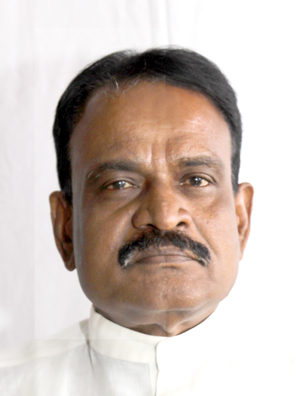
The Hon. Gnanamuththu Srineshan
Gnanamuththu Srineshan said Sri Lanka’s economic failures stemmed less from choosing capitalism or socialism than from corruption, waste, mismanagement and discriminatory development, and he welcomed the Fiscal Strategy Statement and action against those accused of looting public assets. He urged the Government to rebuild the economy by reopening and rehabilitating closed industries in the North and East, including the Valachchenai Paper Mill and other factories affected by the war, to create jobs and reduce poverty, especially among female-headed households and migrant workers. He argued that past tax cuts under Gotabaya Rajapaksa caused major revenue losses and called for progressive, strategic economic action at national, provincial and district levels while noting that reported growth had not yet resolved poverty and price instability.
Verbatim record (translated)
Machine-translated from Sinhala / Tamil / English¶ 01 Hon. Deputy Chair, we are debating the Fiscal Strategy Statement during the Adjournment.
¶ 02 Our country has learned more lessons than necessary from past economic policies and initiatives. Globally, two broad models prevail—capitalism and socialist-oriented economics. Post-independence, Sri Lanka largely followed capitalist policies, which elevated the rulers’ wealth rather than the nation’s economy. Particularly by 2022, due to backward, flawed fiscal and economic policies, the country went bankrupt. Shockingly, Bangladesh, formed in 1971 after separating from Pakistan, has reached a stage of lending to us. We must appreciate Bangladesh and feel sorrow for our plight.
¶ 03 Japan, devastated in World War II, pursued capitalism yet achieved high growth; China, pursuing socialism, also grew. The lesson is: whichever model, growth comes where there is no corruption, fraud, bribery or waste.
¶ 04 Despite many leaders—D.S. Senanayake, Dudley Senanayake, S.W.R.D. Bandaranaike, W. Dahanayake, Sirimavo Bandaranaike, J.R. Jayewardene, R. Premadasa, D.B. Wijetunga, Chandrika Kumaratunga, Mahinda Rajapaksa, Maithripala Sirisena, Gotabaya Rajapaksa—none brought the needed economic transformation. Instead, policies spawned an internal war that ravaged the nation for 30 years, while open economy practices bred corruption, fraud, bribery, waste, and a culture of commissions and patronage.
¶ 05 Now, based on lessons learned, the Government presents a strategic fiscal statement for a proper economic path. We welcome legal action against those who looted public assets—even in medicines, there were frauds. Such crimes against innocent lives must be investigated impartially and punished severely, without fear or favour. Yet a prior government protected an accused by defeating a no-confidence motion—this too must be remembered.
¶ 06 We support the current Government’s efforts to build a stable economy. Before the war, the East had many factories; many are now closed. About 96% of factories are outside the North and East; only 4% are in the North/East. A non-discriminatory policy must reopen and establish industries in the North/East.
¶ 07 For example, the Valachchenai Paper Mill in Batticaloa once supported over 4,000 families and won productivity awards even in 1996. Mismanagement led to losses and closure. We have long urged its rehabilitation and development to create jobs, but instead of a “factory,” it now provides jobs to fewer than 300. To develop the economy strategically, closed factories should be reopened under clean, efficient administration.
¶ 08 Recently, the Treasury Secretary was widely praised across parties for crafting a smart plan to rebuild from bankruptcy. We need such administrators. Politicians engaged in corruption are now being arrested, handcuffed and jailed—this is a lesson for those in office now. Wrongdoers must be punished.
¶ 09 There were multiple factories in Batticaloa—paper, weaving, printing—closed due to war. Now peace prevails; we must rebuild confidence and provide jobs by reopening step by step. In the North, cement, chemical, garment factories also closed—assess feasibility, job creation, and act.
¶ 10 Men and women now migrate to the Middle East for work and face exploitation. There are over 90,000 female-headed households in the North/East; many are in poverty. We must create domestic income opportunities for them.
¶ 11 Around 1.8 million were taxpayers; under Gotabaya Rajapaksa, about 1.2 million were removed, leaving around 400,000, causing revenue losses of around Rs. 600 billion. People with no basic understanding of governance reached power due to family influence; their incompetence soon became apparent. Going forward, we must undertake progressive, strategic actions at national, provincial and district levels to recover the economy. Though 2024 growth is said to be 5%, poverty and price instability persist.
¶ 12 Finally, on Chemmany: the student Krishanthi was raped and murdered; Corporal Somaratne Rajapakse and others were convicted; he reportedly disclosed the extent of killings and burials, naming officers. In the Chemmany grave, a mother and child skeleton are seen together—evidence of heinous, racist atrocities. Victims of such crimes, and torture in camps like Battalanda and elsewhere, must receive justice. Thank you.
Provenance
- Source
- Hansard, Monday, 30 June 2025 ·No. 1752037071094166 ·English daily/uncorrected Hansard
- Page · column
- not yet extracted — page/column anchors are not in the current dataset; the source PDF is the citable location.
- Permalink
/lk/speeches/28119
Cite as: The Hon. Gnanamuththu Srineshan. 10th Parliament, Parliament of Sri Lanka. Hansard, 30 June 2025. No. 1752037071094166. Politick, https://staging.politick.io/lk/speeches/28119