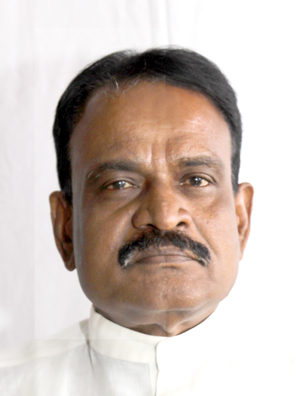
The Hon. Gnanamuththu Srineshan
Gnanamuththu Srineshan supported the appointment of a qualified Education Minister and urged the Ministry to prioritize equitable education for poor students in difficult and very difficult areas, particularly in Batticaloa District. He highlighted shortages of teachers and technology, unsafe conditions caused by elephant intrusions near schools, and deprived conditions in areas including Vakarai, Kattumurivu and related villages. He also raised salary and seniority anomalies affecting Teacher Advisors and requested revised scales consistent with their position in the education hierarchy. On higher education, he called for university programmes to be aligned with employment opportunities and asked that the pending appointment of a competent and honest Vice-Chancellor for Eastern University be expedited.
Verbatim record (translated)
Machine-translated from Sinhala / Tamil / English¶ 01 Hon. Presiding Member, thank you for the opportunity to speak in the Committee Stage debate on the Ministry of Education, Higher Education and Vocational Education.
¶ 02 Those with the requisite capability should be placed in appropriate positions. In that context, it is welcome that someone with strong academic credentials, including a PhD in education, has been appointed as the Minister of Education. The responsibility of the Ministry has thus been entrusted to a suitable person. I wish you success in your work.
¶ 03 I too have served in the field of education, particularly for about 30 years in the Sri Lanka Education Administrative Service as a Director of Education. That gave me the chance to understand the sector deeply. In the past, there were administrations that governed with right-wing policies. Yet, because of what C. W. W. Kannangara achieved—his vision to provide education to poor children—his name endures with undying fame. Hon. Minister of Education, as a Minister suited to the education field, you now have an opportunity. I earnestly urge you to use it to ensure proper education for poor students living in difficult and very difficult areas.
¶ 04 As the Member of Parliament representing Batticaloa, I want to highlight education issues there and the problems faced by some institutions. Broadly, schools can be grouped into: well-resourced schools, schools in difficult areas, and schools in very difficult areas. In Batticaloa District—within Kalkudah Education Zone, Batticaloa West Education Zone, and divisions like Paddiruppu–Poratheevupattu and Pattipalai—many schools operate in deprived conditions. Students there lack the resources for equitable learning.
¶ 05 In some places, even as school is in session, elephants from nearby forests enter and threaten children. The Zonal Director told me that students learn in fear. In villages such as Kattumurivu, Pulipainthakal, Koolakkadu, Vakarai, Paavarkodichchenai, Kalukudapanchchenai, 40 Vattai, Kachchakodi, and Swamimalai—classified as very difficult areas—students study in great fear and do not receive equitable education. There is a shortage of teachers and technological facilities, and as a result, quality education is not reaching them. Hon. Minister, within your tenure, please create avenues to ensure equal access to education for students in difficult and very difficult areas.
¶ 06 Recently, Teacher Advisors were appointed (Teacher Advisors’ Service). I have received complaints of anomalies. In schools, there is the Principals’ Service and the Teachers’ Service. Over them sits the Advisors’ Service. Teacher Advisors are selected through competitive or interview-based examinations from among Class I or Class II(1) teachers, and are considered senior to the Teachers’ Service—even placed above it in your own hierarchy: Principals’ Service, then Teacher Advisors’ Service, and then Teachers’ Service. However, when examining salaries, a Class I teacher in the Teachers’ Service earns more than a Class I officer in the Advisors’ Service, and their annual increments are also lower. Because of this, teachers are reluctant to transfer into the Advisors’ Service. In our system, Principals should earn the highest, followed by Teacher Advisors. Please ensure appropriate salary scales and increments for Teacher Advisors consistent with their seniority and selection.
¶ 07 On universities, a point about the Eastern University based in Batticaloa: university education must be high quality. I recall a “wonderful joke” a Professor of Education once shared: Government sets up Arts Faculties, designs curricula, and after graduation when students seek jobs, they are told, “Your education does not match the job market.” We must align programs with employment opportunities.
¶ 08 Regarding the Eastern University’s Vice-Chancellor post, the selection has been conducted but the appointment is still pending. I trust you will expedite this. We need an honest, competent Vice-Chancellor—free of corruption, fraud, and bribery—and not one who seeks advancement by political patronage. There have been allegations of irregularities in the past, even in appointing a Dean of the Faculty of Technology. The University Council has been dissolved; while dissolution is warranted when there are faults, future appointments to the Council must follow proper procedures. Previously, when appointments were made in the South, Tamil representation was said to be lacking. At Eastern University, earlier there were nine Tamils, four Muslims, and two Sinhala members appointed. Now, it has reportedly changed to five Tamils and seven Sinhala members. If you appoint persons of integrity from within the district—honest and effective—we will accept that. But note: travel costs for members to attend meetings can reach Rs. 30,000 per round trip, which runs counter to efforts to reduce expenditure. Please consider this as well.
¶ 09 On inclusive education: Hon. S. W. D. Silva also raised this. In Batticaloa, the Udhayam Visually Impaired Association supports blind students studying at the Kaladi School for the Visually Impaired. Of the 40–50 students studying there annually, many proceed to university. However, in competitive examinations, when maps and image-based questions are asked, they cannot answer due to visual impairment. I raised this during a committee discussion. Please show compassion and provide appropriately adapted examination methods for visually impaired candidates.
¶ 10 Sir, please give me one more minute.
¶ 11 On sports: to develop sports, schools must have programs that channel students into competitions. In past years, wrestlers from our district won first place at national level under the coaching of Mr. Thiruchchelvan. Yet our students lack adequate facilities to train.
¶ 12 On the provision of shoes: there is a practice of supplying shoes only to schools with fewer than 300 students. In reality, many deprived schools with more than 300 students also need this support. Therefore, base such assistance on poverty and deprivation, not merely on student numbers.
¶ 13 Nelson Mandela said, “Education is the most powerful weapon which you can use to change the world.” You hold this weapon. Therefore, within your tenure, you can change our society. Thank you.
Provenance
- Source
- Hansard, Monday, 10 March 2025 ·No. 1743651953052186 ·English daily/uncorrected Hansard
- Page · column
- not yet extracted — page/column anchors are not in the current dataset; the source PDF is the citable location.
- Permalink
/lk/speeches/29455
Cite as: The Hon. Gnanamuththu Srineshan. 10th Parliament, Parliament of Sri Lanka. Hansard, 10 March 2025. No. 1743651953052186. Politick, https://staging.politick.io/lk/speeches/29455