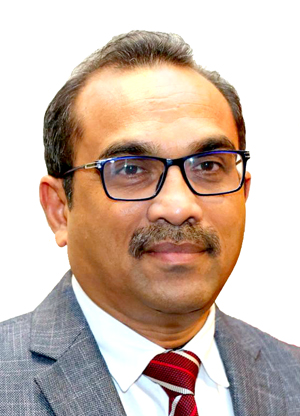
The Hon. Bimal Rathnayake - Minister of Transport, Highways and Urban Development and the Leader of the House of Parliament
Moved approval of the Motor Traffic (Drugs) Regulations, No. 1 of 2025, and presented related Motor Traffic Act regulations, stating that they create procedures for testing drivers suspected of drug impairment where previous rules covered only alcohol. He said police may refer suspected drivers to authorised medical officers for examination and obtain bodily samples, and noted plans to use mobile laboratory buses at bus stands for rapid, free drug testing in coordination with health authorities, police, local officials and transport bodies. He also introduced Motor Traffic (Expressway) Regulations linked to seat belt requirements and road safety on expressways.
Verbatim record (translated)
Machine-translated from Sinhala / Tamil / English¶ 01 Mr. Speaker, I move the following:
¶ 02 “That the Regulations made by the Minister of Transport, Highways, Ports and Civil Aviation under Section 237 read with Section 151 of the Motor Traffic Act (Chapter 203), and published in the Gazette Extraordinary No. 2452/40 of 04 September 2025, and presented on 18.12.2025, be approved.
¶ 03 (Cabinet approval has been obtained.)”
¶ 04 In addition, I present Item No. 2 of the Order Paper — Regulations (No. 2) under the Motor Traffic Act.
¶ 05 Today, we seek to address two very important matters of road safety. Briefly:
¶ 06 First, the Motor Traffic (Drugs) Regulations. Under Section 151 of the Motor Traffic Act, it was an offence to drive after consuming alcohol on a public road. However, regulations only provided for alcohol testing. There was no prescribed method, process, or thresholds to test for other drugs and determine impairment under the Act. That was a major lapse, despite the long-standing narcotics problem in Sri Lanka.
¶ 07 Therefore, under the regulation-making power in Section 237 read with Section 151, as the subject Minister, with the support of our Ministry officials, I promulgated the Motor Traffic (Drugs) Regulations, No. 01 of 2025, by Gazette Extraordinary No. 2452/40 dated 04 September 2025 — exactly four months ago. Those regulations are in force; today we fulfill the requirement to place them before Parliament.
¶ 08 Under these Regulations, where a police officer has reasonable suspicion that a person is driving a motor vehicle under the influence of drugs, that person can be taken to a Government Medical Officer or to an officer of a hospital empowered for that purpose. Observable indicators include the driver’s behavior, speech, body movement or balance, appearance of eyes, clothing, etc., which deviate from normal patterns. If so suspected, the police officer may have the person examined for drug use. For that, the police are legally empowered to obtain samples of blood, urine, saliva, or other bodily fluids for testing by a Government Medical Officer. If drug use is established, the police can institute the relevant judicial proceedings.
¶ 09 Bus associations themselves say that many drivers and conductors, especially on long-distance and express routes, are addicted to drugs. We have seen tragic incidents — for example, in Borella, where a tipper mounted the pavement and killed a pedestrian; that driver had used substances. This is a grave issue, and now we have both the legal basis and practical means to act.
¶ 10 Second, drug testing has been difficult and complex. We thank the Ministry of Health, Minister Nalinda, and State Minister Hansaka Wijemuni. Over the years, various institutions provided sophisticated mobile laboratory buses to the Health Ministry. They can conduct full panels of tests, and results can be obtained in minutes. Many had been kept aside without use. We have now transferred one such bus to the National Transport Medical Institute and begun operations. We can take it to bus stands and, together with Institute officers and police, conduct on-site testing. Drivers can voluntarily provide samples and get immediate results. I personally observed this at the Makumbura launch — in about 2–3 minutes the panel returns results for 12 drugs, with a printed result sheet for the driver. We hope to deploy similar buses in every Province, and also use this unit widely. I request Mayors, Members from both Government and Opposition, and Provincial Governors to facilitate setting days at local bus stands; we will provide the service at no charge.
¶ 11 Driving a bus under the influence of drugs is like a suicide bomber driving a bus. Today, both the law and the practical apparatus will be in place.
¶ 12 The second Gazette is for the Motor Traffic (Expressway) Regulations, by Gazette Extraordinary No. 2455/29 of 25 September 2025. Under a 9 August 2011 Gazette, drivers and front-seat passengers were required to wear seat belts on all roads. While that law is largely implemented, studies show injuries and fatalities are higher among back-seat passengers, especially on expressways, with ample video evidence. Back-seat passengers are highly vulnerable.
¶ 13 On the basis of studies and advice from Police and orthopaedic surgeons, we issued a Gazette in September last year making seat belts mandatory for all passengers — front and rear — on expressways, including in buses and other vehicles. This has been in force since 25 September. The Police can now enforce against non-compliant passengers and drivers.
¶ 14 Regulation 8A states, in effect, that a motor vehicle not equipped with proper occupant restraint systems as required shall not be permitted to enter an expressway. If you do, Police can act. Saying “I don’t have money to install seat belts” is not an excuse. Everyone must conform to the law. This Government is committed to establishing the rule of law, for President, Prime Minister, Ministers, MPs and the public alike.
¶ 15 Do not say, “I can’t fit seat belts; I hid them,” etc. Seat belts are now mandatory. Some vehicles arrived without belts; we gave three months to install them. That grace period has now lapsed. We urge you to comply. The cost of belts is far less than what some spend on vehicle ornamentation.
¶ 16 On children under 12, our Members will speak. We intend to obtain recommendations from medical institutions and align with global best practice for child restraints. We see some fathers holding a child on their lap next to the steering wheel — affectionate, but unsafe. Our laws are not yet adequate. We look forward to guidance.
¶ 17 The main objective of these Regulations is public safety. Government must build good roads, ensure safe vehicles, and ensure safe travel by the public; together this is road safety. Data show driver behavior accounts for about 53 per cent of crashes — drugs, alcohol, fatigue, distraction by mobile phones, racing, etc. Even on expressways, we have seen reckless acts; the IGP has been instructed to act.
¶ 18 I welcome Members’ views, particularly on making seat belts mandatory in long-distance buses on ordinary roads. Over the next two-and-a-half years we will complete the expressway network under construction, but for now long-distance services mainly run on ordinary roads. Seat belts are the most effective measure to protect passengers, like helmets for motorcyclists — this is not rocket science.
¶ 19 On public transport drivers: in many countries this is distinct from ordinary driving. In Sri Lanka too, a PT (Public Transport) licence is required in addition to a heavy vehicle licence. About 6,000 have been trained; some obtained it after only a two-day course — adequacy is doubtful. We are revising this: bus drivers, office van drivers, school bus and van drivers — anyone carrying passengers — must have a PT licence. Even taxi drivers will require a PT licence. The course content is finalized, with private sector input, and will be made mandatory with a transition period (six months to a year). New applicants must complete it; existing holders will have a structured pathway.
¶ 20 On age: under the School Service programme, to receive government funding for rural school buses, the driver must be over 30. The idea is to ensure a level of maturity and understanding regarding children. We will propose to make PT-licensed school bus/van drivers subject to an age threshold as well. Generally, a heavy vehicle licence can be obtained at 21, a public passenger transport licence after 25, and for transporting children, we propose 30, with a special course.
¶ 21 On enforcement: we intend to move towards a demerit points system. As an interim step, the Police, Postal Department and our Ministry will cooperate. Fines can already be paid online; for those who cannot, we will equip traffic police with smart phones and enable payments via GovPay and at post offices. This will generate big data — allowing us to see who, where, and what offences occur, and to make evidence-based decisions. We will then implement demerits. However, in public transport, suspending a driver alone is insufficient; the owner simply assigns another driver. Therefore, we will also introduce demerits on the bus permit itself. If a particular permitted bus repeatedly violates rules, the permit will accrue demerits regardless of which driver is at the wheel. We are developing this to bring it to the legal stage.
¶ 22 We have finalized safety specifications for buses to be imported from this year — after years of discussion — and will table them after Cabinet approval.
¶ 23 At Makumbura, we have established a free basic roadworthiness testing point for buses. I have instructed that after a month or two, a reasonable fee may be charged. We invite capable garage owners to register with Provincial Councils or the DMT to conduct a monthly basic roadworthiness test for buses at controlled fair rates — an opportunity also for enterprise.
¶ 24 We also plan that licence renewals be conducted through the National Transport Medical Institute in the coming months, building it into a key transport administration institution.
¶ 25 On Kerawalapitiya: the ETC system on the Katunayake Expressway originally only mattered at exit (Katunayake or Ja-Ela), so entrance points were irrelevant and promotion lagged, and those using Southern and Outer Circular expressways got no benefit. With subsequent network integration via Kadawatha–Kerawalapitiya, users had to pay twice (at Kerawalapitiya and again at Ja-Ela or Katunayake), causing over 10 minutes of unnecessary delay at Kerawalapitiya. We removed that after study. Early days saw some confusion with non-ETC users entering wrong lanes; we have since added more gates, more tellers, clearer blue markings, and public now understand to use ETC in and out. Delays have reduced by 6–7 minutes.
¶ 26 Usage of expressways has risen significantly. As per statistics reported (e.g., Lankadeepa by Bhanuka Amarasinghe), in 2025 vehicles exiting Peliyagoda increased by 500,000 over 2024 (from 4.2 million to 4.7 million). Katunayake exits rose from 4.48 million to 5.0 million; Ja-Ela from 1.2 million to 1.58 million — overall an 18.8 per cent increase. We cannot expand entrances/exits at the same pace immediately; hence the operational changes at Kerawalapitiya. We will continue to expand ETC lanes and cashless payment options. We also intend to mandate bank-based payments as some still arrive with large notes for small tolls, slowing queues. Relevant Ministers have written supporting upgrading ETC corridors used by their fleets. The core issue is the historic lack of ETC promotion.
¶ 27 Mr. Speaker, we will proceed with these changes.
¶ 28 Finally, allow me a few minutes on a national matter. Recently, there was a major international incident: the democratically elected President of Venezuela was abducted in a United States operation and is now produced before courts in another country. The Janatha Vimukthi Peramuna condemned this: “We strongly condemn the United States of America’s military aggression against the independent and sovereign State of Venezuela and the abduction of democratically elected President Nicolás Maduro and his wife.” Such actions contravene the UN Charter that most of the world abides by. Whatever problems within a country, only its people have the right to determine their government; no other country has the right of aggression — a fundamental post-1945 UN principle that ended the law of the jungle and provided a lifeline for countries like ours.
¶ 29 From 2000–2014, Venezuela reduced poverty and inequality, expanded health and education access (introducing free health and free education where not previously available), and grew on oil, with inflation managed and food security improved via subsidies. After US sanctions in 2014, from 2014–2020, there was crisis and collapse with catastrophic increases in poverty and inequality. From 2021–2025, despite sanctions, indicators improved slightly per UN reporting. The abduction reflects a disregard for the UN system. I have seen reports that the US plans to withdraw from numerous UN and international bodies (list tabled), including UNFCCC, UN Women, UNFPA, UN-Habitat, UN Democracy Fund, UN Peacebuilding Commission, UN University, UN-Water, UN-Energy, and even the Colombo Plan Council. While any state has sovereign choices, for countries like ours the UN system and Charter are essential. We should all stand for the implementation of the UN Charter.
¶ 30 The UN Secretary-General’s Special Envoy for Road Safety — a former Ferrari champion — is ready to assist Sri Lanka. This is the kind of support the UN enables. Violations of the Charter affect not only the target state but all of us. Therefore, we must uphold the UN system.
¶ 31 Thank you.
¶ 32 Question proposed.
Provenance
- Source
- Hansard, Thursday, 8 January 2026 ·No. 23118 ·English daily/uncorrected Hansard
- Page · column
- not yet extracted — page/column anchors are not in the current dataset; the source PDF is the citable location.
- Permalink
/lk/speeches/4903
Cite as: The Hon. Bimal Rathnayake - Minister of Transport, Highways and Urban Development and the Leader of the House of Parliament. 10th Parliament, Parliament of Sri Lanka. Hansard, 8 January 2026. No. 23118. Politick, https://staging.politick.io/lk/speeches/4903