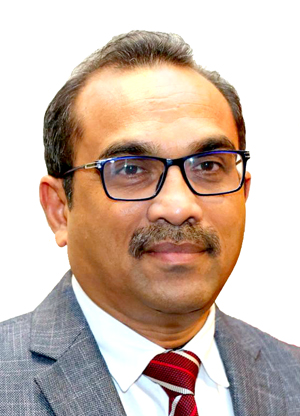
The Hon. Bimal Rathnayake
Hon. Bimal Rathnayake referred to a 8 January 2025 Hansard answer by the Prime Minister on the Clean Sri Lanka programme and tabled the relevant extract, stating that its organizational structure and initial awareness phase had already been explained. He said implementation would expand countrywide from 1 February, with village-level public participation and invitations for Opposition MPs to support activities in their electorates, stressing that the programme would evolve through public input rather than a fixed manual. He also linked the programme to political ethics, citing coastal clean-up efforts and the Government’s stance that Ministers and MPs should avoid using bungalows or luxury vehicles at public expense.
Verbatim record (translated)
Machine-translated from Sinhala / Tamil / English¶ 01 What we have here is the Hansard report of 8 January 2025. Hon. Asitha Niroshan Egodawithana MP asked the Hon. Prime Minister a question that day about the Clean Sri Lanka project. Why was it asked? Hon. Presiding Member, it was not only for us to know, but to give the people of the country the opportunity to know as well. I am now tabling the relevant section from columns 174 to 180 extracted from the Hansard of 2025.01.08.
¶ 02 Those who have not read the Hansard, including Hon. Dilip Wedaarachchi, can read it; the Hon. Prime Minister gave a very clear answer that day. You cannot say the same thing every day. There is a need to come to Parliament and learn. This is the Hansard report of 8 January 2025. We launched the Clean Sri Lanka programme on January 1. On January 8, a clear answer was given. We also clearly set out the organizational structure. We accept that. We also acknowledge that we are still in the month where we are raising awareness about the programme. Therefore, our Members may not yet have many experiences regarding operations. They are now organizing this; putting it into books; gathering views; talking with the private sector; going to government departments and planning the elements related to the Clean Sri Lanka programme. Therefore, there is not a lot of information to narrate yet. But, look here: from February 1, the Clean Sri Lanka programme will kick off across the whole country like a Twenty20 match. It will be like an exhibition—just watch.
¶ 03 We invite Opposition Members too to carry out that task from their seats. You were all elected by the people’s vote. There is no issue with the Opposition. We respect you. Hon. Gayanta Karunathilaka, come and carry out the activities from your seat in Galle—there is no problem. There is no politics in this. What is in this? It is to work down to the village level. It is the power of the people in the village. The people in the village will decide. No one in Colombo will dictate where a station should be built or how a bus stand should be made. The task is started by involving the people; sometimes it can even begin with shramadana. We learn some things in the very process of doing. There is no separate textbook written for Clean Sri Lanka; no separate manual. There are a number of clear measures. They have been gazetted. This is not a thesis, Hon. Presiding Member. It is like a periodic table. When Mendeleev created the periodic table, what did he do? He correctly placed the elements he had discovered. For those not yet discovered, he kept blank spaces. As a professor, you would know that keeping those blanks is what paved the way forward. So, when something new was found, they did not force it onto what they already knew; they placed the new element in the blank space in the periodic table. Clean Sri Lanka is like that. It is not perfect. Now someone can take a voice cut and say “it’s not perfect” and boo. Nothing human is 100 percent perfect! Clean Sri Lanka has no single author. It is the outcome of a public movement. It is the people who will fill it and perfect it. Some expect everything to be written from A to Z and done. That is not how it works; it evolves.
¶ 04 Likewise, political ethics—Hon. Member—are crucial. We began Clean Sri Lanka with political ethics. We cleaned up. Hon. Kanchana Jayawardana is not in the House today. The entire coastal belt was cleaned; he was literally waist-deep in it. That is political ethics. Today we informed the Hon. Speaker that we all are working responsibly to make this Parliament ethical. Ministers have not taken bungalows; have not taken super luxury vehicles. We have no difficulty refraining from that. There are some MPs who have two or three Mercedes cars at their homes. We have no difficulty riding in those; we do not have that kind of strange affliction. But we will not use such vehicles out of public funds—not because we are poor, but because you made us poor. When Sri Lanka becomes rich, and if Members use better cars—non-wasteful vehicles—we will not object.
¶ 05 We said we will abolish MPs’ pensions. The relevant Bill is coming. We will definitely abolish it. There is no need for a pension for public office. Is it not enough to have the feeling at death that one worked for the people, Hon. Gayanta Karunathilaka? That is what I say. That is why I asked you—not to point fingers at others, and not because you are in front of me, but because you were there.
¶ 06 Today we informed the Hon. Speaker about meals in Parliament. One Member said he saw some MPs come and eat in the morning, at noon, and at night, and even take away parcels. I am ashamed. Hon. Presiding Member, our economic levels may rise and fall, but our values are not impoverished. We are not like that. I even know the two lips that said it; I know that Member. I can tell when he was born; I am from the same district. But when I came to Parliament in 2000, as I remember, a meal cost Rs. 15; breakfast was Rs. 6; lunch was Rs. 15. At that time we—the ten MPs of the JVP—decided to increase the meal price. This Parliament is witness. Those around Ranil and Chandrika held on tight. The rich, those who bragged, were keen to eat for free. Therefore, we have told the Hon. Speaker that breakfast, tea, and all meals for all MPs should be cost-reflective. Even if it is Rs. 3,000, pay and eat. Ranil Wickremesinghe did not have that backbone. Those who imagine themselves as elite did not have the courage or honesty for that. The Committee on House Affairs meets tomorrow. We request that proposal be approved tomorrow, Hon. Presiding Member. The Hon. Prime Minister, or the Minister in charge of Parliamentary affairs, can take it to Cabinet the next day. Then let us eat at Rs. 3,000 or Rs. 2,500—let us try it. That is good, isn’t it? That is how it should be. Did you have that backbone? No. Thereafter we can see how to take it to the next levels. So we have begun with political ethics.
¶ 07 We are also trying to do what we say. There may be small technical faults on our part. Now look at the Opposition Members elected by the people’s vote. How important it is to be elected by the people’s vote! I truly respect anyone who comes elected by the vote. In 2004, when I was a Deputy Minister, I kept a separate file in my office for people’s representatives. I truly respect them. But what did you speak about? About three-wheelers and scraps and such. What are these? We repeatedly said we did not do that. I say, we got a third-class attack. The same thing is being repeated. Therefore we say to you, there is no such thing. Clean Sri Lanka is a lifestyle. That lifestyle is not one person’s lifestyle. We are trying to create a versatile, qualitatively higher lifestyle by bringing society together with the people’s consent. You do understand that; but when understanding grows, this is what happens.
¶ 08 Regarding the electricity bill, criticisms were raised at the Hon. Minister. He has clearly said it was wrong, and he has sought a privilege issue. We expect an answer to that privilege matter. Now, what happened? After Janaka Ratnayake said to reduce the electricity bill, he was slapped down here, made to kneel metaphorically, and removed from office. Who did that? After he said to reduce the electricity bill, who here voted to send Janaka Ratnayake home? Chamal Rajapaksa, Mahinda Rajapaksa, Jeevan Thondaman, Kanchana Wijesekera. That is in this Hansard record. Also Kader Mastan, Chamara Sampath Dassanayake, Rohitha Abeygunawardena, Namal Rajapaksa. We want to tell you that those are the ones.
¶ 09 There is another matter involving a group. I have with me the Hansard of the day of the Bond Scam debate. You know as well, Hon. Presiding Member, there was a group called the “footnote gang” who stood with the Central Bank fraud—the Bond Scam.
Provenance
- Source
- Hansard, Wednesday, 22 January 2025 ·No. 1739261035021938 ·English daily/uncorrected Hansard
- Page · column
- not yet extracted — page/column anchors are not in the current dataset; the source PDF is the citable location.
- Permalink
/lk/speeches/5766
Cite as: The Hon. Bimal Rathnayake. 10th Parliament, Parliament of Sri Lanka. Hansard, 22 January 2025. No. 1739261035021938. Politick, https://staging.politick.io/lk/speeches/5766