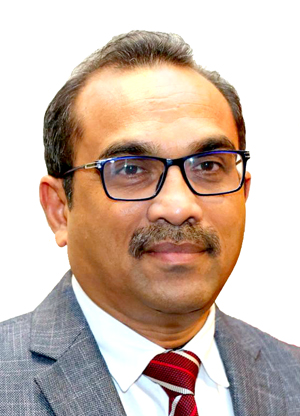
The Hon. Bimal Rathnayake - Minister of Transport, Highways and Urban Development and the Leader of the House of Parliament
Bimal Rathnayake supported the Bill to repeal parliamentary pensions, describing it as part of a wider effort to reduce political entitlements, restore public trust, and present governance as public service rather than privilege. He argued that past expansions of MP benefits, corruption, and nepotism damaged confidence in politicians and institutions, and said the Government is also cutting unnecessary vehicles, residences, and security while improving revenue collection and international confidence. He rejected claims that ending pensions would cause poverty or corruption, noted that abolishing presidential pensions would require a constitutional amendment, and said the reform supports national unity and a renewed political culture.
Verbatim record (translated)
Machine-translated from Sinhala / Tamil / English¶ 01 Hon. Speaker, we debate today the Bill to repeal parliamentary pensions, a key promise we made. Politics is a choice—one of public service and sacrifice. Worldwide, special vocations entail greater sacrifice and are recognized as such, but our people demand a political culture worthy of public respect. The term “Honourable” must mean something.
¶ 02 Technically, MPs receive an allowance, not a salary. But the deeper issue is the degradation of politics over decades through corruption, nepotism, and entitlements. From 1977 onward, the MP pension evolved and expanded excessively—eventually extending benefits across generations. Parliament itself kept widening these benefits.
¶ 03 As trust in politicians eroded, independent commissions and parallel structures were created. Some argued technocrats should run the country. But technocrats are not elected to make holistic political choices; only politicians can integrate multiple competing priorities and be accountable to the people. Yet our political system’s excesses led international institutions to distrust us: stringent conditions, lengthy appraisals even for simple projects—because of the legacy of waste and corruption.
¶ 04 What are we now doing? Rebuilding trust in politics and institutions—nationally and internationally. This repeal is one part of a broader effort: reducing unnecessary vehicles and residences, paring back security where not needed, and changing the image of governance from entitlement to service. The results are visible: improved revenue collection at Customs, Inland Revenue, and Excise—because businesses see their taxes are not feeding political excess. International leaders from the World Bank, IMF and ADB are engaging with Sri Lanka in an unprecedented manner, reflecting improved confidence.
¶ 05 This is not revenge. Many in the Opposition claim abolishing pensions will cause poverty or fuel corruption. Most citizens have no pension; that does not make them thieves. Nor did pensions prevent some politicians from committing crimes—several high-profile figures facing convictions or cases receive pensions. On presidential pensions: abolishing them would require a constitutional amendment. Many former Presidents are also former MPs and currently receive both pensions. The public should know these facts.
¶ 06 Some MPs put their children or relatives on personal staff payrolls to draw salaries—so let’s not pretend the only support mechanism was the MP pension. Our goal is not to punish but to restore dignity to politics, so that the image of Sri Lanka improves, bringing economic and international benefits. Recent independent polling (e.g., Verité Research’s Mood of the Nation) shows Government approval and economic outlook have improved significantly, even amidst the Ditva disaster and industrial actions in the health sector.
¶ 07 We also highlight positive international visibility—such as successfully hosting the India–Pakistan cricket match in Sri Lanka—which required trust in our national security and organization. This contributes to our country’s image and economy.
¶ 08 Finally, we reject divisive ethnic politics. We will not feed Sinhala, Tamil, or Muslim chauvinism. We will nourish national unity. This Bill is part of rebuilding a political culture of service. Thank you.
Provenance
- Source
- Hansard, Tuesday, 17 February 2026 ·No. 23279 ·English daily/uncorrected Hansard
- Page · column
- not yet extracted — page/column anchors are not in the current dataset; the source PDF is the citable location.
- Permalink
/lk/speeches/5927
Cite as: The Hon. Bimal Rathnayake - Minister of Transport, Highways and Urban Development and the Leader of the House of Parliament. 10th Parliament, Parliament of Sri Lanka. Hansard, 17 February 2026. No. 23279. Politick, https://staging.politick.io/lk/speeches/5927