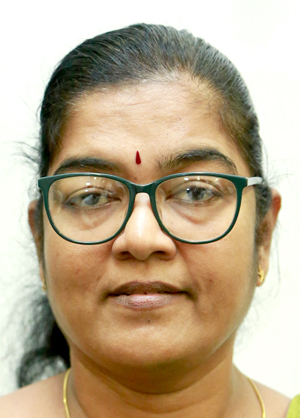
The Hon. (Mrs.) Saroja Savithri Paulraj - Minister of Women and Child Affairs
The Minister linked the debate on regulations under the Foreign Judgments (Reciprocal Enforcement, Registration and Execution) Act, No. 49 of 2024, to broader themes of legal reform, justice and social inclusion. She argued that recognition of foreign judgments, particularly in debt and matrimonial matters such as divorce, maintenance and property division, would benefit citizens, including women, while urging reciprocal recognition of Sri Lankan judgments abroad. She also called for faster legal and administrative processes relating to family law, foreign marriages, citizenship and spouses separated by overseas employment, and referred to recent government measures on political privileges, pensions and illicit assets. She additionally noted the National People’s Power’s control of the Colombo and Nuwara Eliya councils and described the election of Vrai Kelly Balthazar as Mayoress of Colombo as significant for reconciliation and women’s political leadership.
Verbatim record (translated)
Machine-translated from Sinhala / Tamil / English¶ 01 Hon. Deputy Chairperson of Committees, though we discuss regulations under the Foreign Judgments (Reciprocal Enforcement, Registration and Execution) Act, No. 49 of 2024, I first wish to speak about our victory at the Colombo Municipal Council. A short while ago, our colleague Vrai Kelly Balthazar took oaths as Mayoress of Colombo. We consider it a historic victory. We have also won the Presidential, Parliamentary and Local Government elections, and now the councils of Colombo and Nuwara Eliya are under our control.
¶ 02 Colombo is a historic, diverse city—multi-cultural, multi-ethnic, multi-religious and multi-lingual—embracing Sinhala, Tamil, Muslim, Burgher and Malay communities across upper and lower middle classes and urban settlements. Winning Colombo confirms that the National People’s Power has gained the confidence of these communities. This is a milestone for national reconciliation and for women’s political leadership.
¶ 03 This victory signals the era of working women and people rising above old patronage politics. We must not belittle this achievement. We pledged to change political culture, elevate women’s leadership, and we have marked that at the highest municipal level in the capital. Over the next four years, decisions taken must consider not only the upper middle classes but also the urban poor with limited sanitation and environmental rights.
¶ 04 Turning to today’s regulations: by recognizing and enforcing certain foreign judgments in Sri Lanka, especially in debt matters and matrimonial cases such as nullity and divorce, we gain clear benefits. From a women’s rights perspective, recognizing foreign decrees locally aids enforcement of maintenance and property division outcomes.
¶ 05 Law must serve justice. As John Austin said, law is a system of commands backed by state authority; it must be fair. We are committed to building a law-abiding and rational state. Recently we abolished special privileges for former Presidents and MPs’ pensions, and we are moving to confiscate assets illicitly acquired through organized crime and narcotics, to restore economic justice.
¶ 06 Legal enforcement should promote social and economic justice, freedom and dignity, and an inclusive society. Over the past six months we have taken measures to remove decisions that harmed people’s freedoms and to improve living standards—through economic, ethical and structural reforms.
¶ 07 We also need reciprocity abroad: just as we accept certain foreign judgments, other countries should recognize ours. We will work internationally so that Sri Lankan decisions are likewise respected.
¶ 08 Finally, we must adapt our family and civil status laws to present realities: many young couples marry and then live apart due to foreign employment, especially in the North and East. Government should expedite legal and administrative facilitation so spouses can reunite, and ensure that marriages with foreign nationals and citizenship issues are processed swiftly, removing delays and barriers so people can live freely.
¶ 09 Law should ease people’s lives, safeguard democratic rights, build trust in justice, and serve as a marker of development. We will pave that path. Thank you.
Provenance
- Source
- Hansard, Wednesday, 18 June 2025 ·No. 1751280704002343 ·English daily/uncorrected Hansard
- Page · column
- not yet extracted — page/column anchors are not in the current dataset; the source PDF is the citable location.
- Permalink
/lk/speeches/6827
Cite as: The Hon. (Mrs.) Saroja Savithri Paulraj - Minister of Women and Child Affairs. 10th Parliament, Parliament of Sri Lanka. Hansard, 18 June 2025. No. 1751280704002343. Politick, https://staging.politick.io/lk/speeches/6827