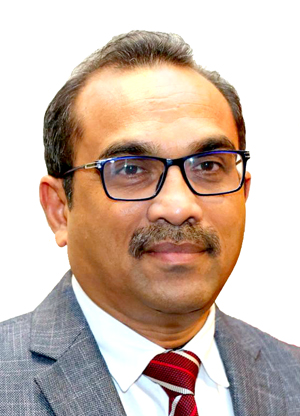
The Hon. Bimal Rathnayake - Minister of Transport, Highways and Urban Development and the Leader of the House of Parliament
During an Adjournment debate marking International Women’s Day, Bimal Rathnayake argued that social, economic and institutional structures continue to limit women’s advancement despite their major contribution to Sri Lanka’s economy, including foreign exchange earnings. He highlighted unpaid domestic and care work as a key barrier affecting even educated and professional women, and noted declining female representation at senior levels in universities, health administration and other institutions. He called for identifying and removing administrative, institutional and attitudinal barriers, including through measures such as low-interest credit and support for women’s entrepreneurship, and also referred to the impact of conflict in the Middle East on women’s vulnerability globally.
Verbatim record (translated)
Machine-translated from Sinhala / Tamil / English¶ 01 Hon. Presiding Member, during this Adjournment moved by Hon. Samanmali Gunasinghe to mark International Women’s Day, many issues relating to women in Sri Lanka have been discussed. I wish to add a few points.
¶ 02 Beyond biological differences, women and men alike are entrusted with great responsibilities and are capable of immense contributions. Yet the way society and the economy are structured prevents ordinary working-class women from realizing their full potential for the economy, politics and society. This is true globally and in Sri Lanka. Even where women’s economic contribution is recognized, our social, political and economic structures still fail to harness their power to build a stronger country. Despite this, women now contribute significantly to the economy.
¶ 03 For 25–30 years we have observed that much of our foreign exchange comes from women. But the structure of society and economic conditions mean that, outside a privileged few, most ordinary women—even if educated, capable, dedicated and resilient—face obstacles compared to men at the same level when they try to innovate or change things. One area highlighted in this Motion is the burden of unpaid domestic work that shackles women’s ankles. Even women officers in Parliament face it: after writing speeches, recording and preparing reports late into the evening, more work awaits them at home. Education, leisure and professional development are suppressed under the mountain of unpaid care.
¶ 04 Hon. Presiding Member, you are also an academic. In universities, about 75 percent of students are women—a great achievement of free education. At lecturer level, I think there is roughly a 40:40 gender balance. But when it comes to Deans and Heads, it changes markedly; there are fewer female Vice-Chancellors and in executive posts women’s representation drops. In health, there are many women doctors, but fewer women as Hospital Directors. It is the same here in Parliament. The reason is not lack of capability, but that a heavy stone has been tied to women by society; they go a long way with that weight. Where fair systems exist and women advance—whether in business, education, law, local leadership or politics—behind those achievements lie countless unseen hurdles and walls that men never face. That is the crucial point.
¶ 05 I do not intend to speak much on the economy as many have done so. But whenever a woman advances through fair processes, there remain volumes of untold stories. In a 100-metre race, men start 50 metres ahead in historical, social, political and economic terms. That is why, during a previous Women’s Day debate, I said our 22 women MPs are all “Hypatias”, referring to the Greek woman scientist and mathematician murdered for her work. These women are precious and must be protected. They are rarer than us; in leadership and everything else, they are exceptional. Otherwise, they could not have made it here. Many have no family political inheritance; those who do are here on merit. Therefore, as a country, we must identify and dismantle administrative, institutional and attitudinal barriers that hinder women’s progress—provide low-interest credit, support women’s entrepreneurship.
¶ 06 Due to the attacks by the United States and the resulting Middle East war, women face many problems—not only in Sri Lanka but worldwide. We must intervene, because women are rendered vulnerable not due to inherent weakness but because of oppressive global and local conditions.
Provenance
- Source
- Hansard, Thursday, 5 March 2026 ·No. 23375 ·English daily/uncorrected Hansard
- Page · column
- not yet extracted — page/column anchors are not in the current dataset; the source PDF is the citable location.
- Permalink
/lk/speeches/7105
Cite as: The Hon. Bimal Rathnayake - Minister of Transport, Highways and Urban Development and the Leader of the House of Parliament. 10th Parliament, Parliament of Sri Lanka. Hansard, 5 March 2026. No. 23375. Politick, https://staging.politick.io/lk/speeches/7105