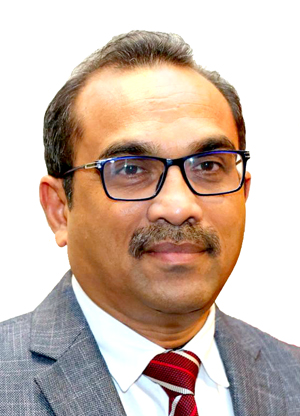
Hon. Bimal Rathnayake - Minister of Transport, Highways and Urban Development and Leader of the House
Minister Bimal Rathnayake supported the Motion, stating that the Government accepts its core concerns about poverty and structural injustice affecting hill country communities. He identified factors such as the 1948 Citizenship Act, plantation enclave structures, line-room housing, geographic isolation, and caste-based vulnerability as causes of long-term deprivation and statelessness. He said housing, land and education issues must be addressed sincerely, noting Cabinet discussions on teacher shortages in hill country schools and the generational impact of past exclusion from citizenship and free education.
Verbatim record (translated)
Machine-translated from Sinhala / Tamil / English¶ 01 Hon. Presiding Member, I support and appreciate the Motion moved by Hon. Radhakrishnan and wish to present a few points.
¶ 02 We accept the essence of the Motion. We came to power on the struggles of those subjected to poverty and social injustice. The hill country people strongly backed the NPP. You too represent such an area, Hon. Presiding Member. We will resolve these issues with full sincerity.
¶ 03 Hon. Kalaichelvi’s speech reminded me of the recent film “Maamannan – Vadivelu.” It illustrates a strategic, structural destruction done to hill country people—not only by rulers but also by some political owners of those parties then. A poor girl, Leela, rises to Parliament and defeats the oppressive ruler. Our people did likewise in September 2024—this is the people’s revolution; not ours alone.
¶ 04 Workers from India were taken not only to Sri Lanka but to Malaysia, Mauritius, Singapore, South Africa and beyond. Why did those in other countries rise socially while Sri Lanka’s hill country people remained the poorest, most deprived? We must examine this.
¶ 05 I compiled a document identifying structural forces: 1) The 1948 Citizenship Act—the single most devastating factor. The Ceylon Citizenship Act No. 18 of 1948 required proof that an applicant’s father was born in Ceylon—near impossible for poor, undocumented labourers—rendering roughly 700,000–900,000 people stateless overnight and stripping voting rights. I thank Ms. Sandamali and the Parliament Library team for research. Many UNP leaders voted for this, and, sadly, leaders of major Tamil parties also supported it. History matters to seek answers. 2) Geographic and social isolation—the ‘enclave’ system: plantations were deliberately designed as closed economies. 3) Line rooms and transport/geographic barriers in the hills entrenched isolation. 4) Intentional targeting of vulnerable castes from the Madras Presidency—poor, lower-caste workers—who then faced both managerial and caste oppression.
¶ 06 Hence, unlike Malaysia or Mauritius, our hill country people remain in this condition after 70 years. This cannot be changed with a magic wand—it is structural. Yes, we must give houses and land—no dispute.
¶ 07 In Cabinet we discussed how to staff teachers in hill country schools. Teacher service has clear qualifications, but the local pool cannot meet needs. You reduced qualifications to recruit teachers; then outcomes often remain lower. It’s not by desire—we know you lowered the bar because you had to. This is a generational challenge. The 1948 sin is not a simple one to forgive—because you cannot climb out easily. Not even free education, begun in 1940s, reached these children, as they were not citizens then.
Provenance
- Source
- Hansard, Thursday, 21 May 2026 ·No. 23621 ·English daily/uncorrected Hansard
- Page · column
- not yet extracted — page/column anchors are not in the current dataset; the source PDF is the citable location.
- Permalink
/lk/speeches/7438
Cite as: Hon. Bimal Rathnayake - Minister of Transport, Highways and Urban Development and Leader of the House. 10th Parliament, Parliament of Sri Lanka. Hansard, 21 May 2026. No. 23621. Politick, https://staging.politick.io/lk/speeches/7438