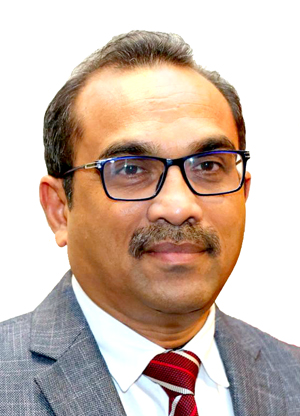
The Hon. Bimal Rathnayake - Minister of Transport, Highways and Urban Development and the Leader of the House of Parliament
Bimal Rathnayake said Development Officers would be allowed to sit the teachers’ recruitment examination, with successful candidates absorbed into the Teachers’ Service in line with Court of Appeal rulings, while further solutions would be considered for those not selected. He argued that public service recruitment and school admissions must remain rules-based and merit-based, rejecting political “chit” or patronage practices. He also outlined the Staff Advisory Committee’s decision to hold an external preliminary inquiry into the suspension of the Deputy Secretary-General of Parliament, stating that the process followed established procedure, allowed the officer to respond, and would proceed separately from any CIABOC investigations.
Verbatim record (translated)
Machine-translated from Sinhala / Tamil / English¶ 01 Hon. Presiding Member, since there is no major political contention on the Regulations under the Sri Lanka Telecommunications Act, I will use this time for some important matters.
¶ 02 Opposition MPs raised the issue of Development Officers, and our Opposition Leader was about to donate blood—literally—to support them, even signing in blood. We thank the President for saving him from that by discussing with the officers and agreeing on a solution: eligible Development Officers will sit the teachers’ recruitment exam, and a large number will be absorbed accordingly.
¶ 03 By my understanding, there are about 52,000 qualified Development Officers. Those who pass can be recruited under the Teachers’ Service and as per Court of Appeal rulings. The union leaders agreed to sit the exam; if all cannot pass, we will find other solutions for the remainder. We thank the President for preventing our Opposition Leader from spilling his blood.
¶ 04 We will continue to support the Opposition Leader, even if some in his own party oppose him. Some tried to incite Development Officers for narrow political gain. We do not oppose protests; people have grievances. But we must build a rules-based country. Trade unions fought to make the public service merit-based, not a haven for political patronage. Once, even university admissions were through MPs’ letters; imagine if UGC was bypassed by politicians’ letters—would Sri Lanka survive? Our Prime Minister and Education Minister have not issued political letters for 14 months—first time in 50 years.
¶ 05 We have resolved school admissions systematically, though channels for presenting issues must improve. In the past, unions fought to set standards: merit-based recruitment, not “chits.” The Opposition wants to take us back to 1970 or 1977—the chit culture. Even Namal Rajapaksa wrote letters to admit children to universities; now they want to revive that rotten culture. The Opposition Leader’s blood act is to restore that.
¶ 06 Safeguarding our institutional advances is a duty of Government and Opposition. Today, MPs can say “No, Minister cannot admit your child; there is a process.” That is a relief created by systems.
¶ 07 I also wish to address the suspension of duties of the Deputy Secretary-General of Parliament. I will not go into details. The Staff Advisory Committee (SAC), established by the 1953 Act, oversees many parliamentary operations—buildings, recruitments, in line with PSC procedures and daily operations. The SAC comprises the Speaker, Opposition Leader, Leader of the House, the Finance Minister or his nominee, and the Secretary-General as Secretary to the Committee. The SAC unanimously decided the procedure: to conduct an inquiry, and, rather than an internal-only process, to engage an external senior official drawn from a Ministry of Public Administration pool. His allowances were approved. An external inquiry was deemed better as many within Parliament would otherwise be involved.
¶ 08 A reasonable period—about one to two months—was given. Contrary to claims, the charge sheet clearly set out matters; the Member concerned was given fullest opportunity to respond. This is not a dispute between the Speaker and the officer, nor a Government–officer issue. It arose from information obtained under RTI about the appointment process.
¶ 09 We are not politicizing it. We know the past: how Parliament was “Rajapaksakaranaya”—how even Chief Justice Shirani Bandaranayake was handled—but we are not weaponizing history. The process has strictly followed procedure. After the preliminary inquiry, a formal inquiry will be conducted expeditiously, not dragged for years, as SAC decided. The officer has rights, including legal recourse.
¶ 10 We came to beautify Parliament, not sully it—working under Standing Orders, saving funds, functioning on time. If there are bribery issues concerning anyone, CIABOC will inquire. The Deputy Secretary-General has also complained to CIABOC; let both processes proceed separately. The Speaker is not a prosecutor; he is just one member of the SAC and its Chair.
¶ 11 In 2000, when I entered Parliament, staff worked professionally without politicization. By 2015, it had been turned into a partisan fortress. We were elected to clean that up.
¶ 12 Finally, to those saying we are taking revenge: Namal Rajapaksa himself said all cases against him were filed by Ranil Wickremesinghe. If so, where is the revenge now? Certain media peddle lies with zoomed photos claiming massive crowds. We are not perturbed. We act responsibly toward the people: we solved the Development Officers’ issue; we are strengthening Parliament; criticize us fairly, but do not spread falsehoods.
¶ 13 On the claim that Kivul Oya is Sinhala colonization: we are a politics free of racism. The President has demonstrated this in the North, where we invest significantly in reconstruction—housing in most-affected areas, Pongal participation, irrigation development, new reservoirs, Mannar’s Pali-Aru project for drinking water for Mannar and Jaffna, a major reservoir near Vadamarachchi, potable water investments, rapid rail restoration, and protecting rights of the poor in the North—without ethnic bias. The NPP is the largest Tamil, Muslim, and Sinhala party—National Peoples’ Power. We do not need racist narratives. If there are concerns, discuss with us based on facts, not falsehoods. I conclude. Thank you.
Provenance
- Source
- Hansard, Tuesday, 3 February 2026 ·No. 23252 ·English daily/uncorrected Hansard
- Page · column
- not yet extracted — page/column anchors are not in the current dataset; the source PDF is the citable location.
- Permalink
/lk/speeches/8838
Cite as: The Hon. Bimal Rathnayake - Minister of Transport, Highways and Urban Development and the Leader of the House of Parliament. 10th Parliament, Parliament of Sri Lanka. Hansard, 3 February 2026. No. 23252. Politick, https://staging.politick.io/lk/speeches/8838