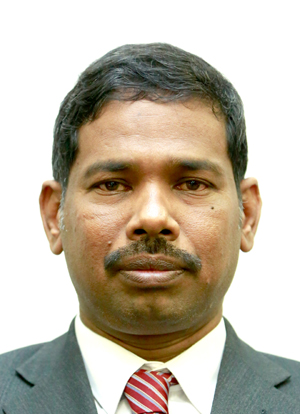
The Hon. (Dr.) Sellaththamby Thilaganathan
The speech outlined Budget allocations for agriculture, livestock, lands and irrigation, including funding for MILCO, and argued that the livestock sector has been weakened by shortages of veterinary staff, outdated vehicles, inadequate fuel and insufficient allowances. It raised concerns that farmers receive low prices while intermediaries capture high margins, and supported proposed government mechanisms through cooperatives and MILCO to improve paddy and milk marketing. It criticized past imports of unsuitable dairy cattle, particularly to dry-zone areas, and emphasized the suitability of indigenous cattle and buffalo systems in the North and East. A request was made to provide controlled grazing access on lands under Forest and Wildlife authorities, citing relevant forest and wildlife legislation and the cultural and livelihood role of cattle rearing.
Verbatim record (translated)
Machine-translated from Sinhala / Tamil / English¶ 01 Hon. Deputy Chairperson, under this year’s Budget, Rs. 216.97 billion has been allocated to the Ministry of Agriculture, Livestock, Lands and Irrigation: Rs. 113.5 billion for agriculture, Rs. 87.5 billion for irrigation, Rs. 13.7 billion for lands, and Rs. 2,139 million for the Department of Animal Production and Health. Additionally, Rs. 19.5 billion has been allocated for MILCO’s infrastructure to improve milk production and processing.
¶ 02 In Sri Lanka, for a long time, the livestock sector has operated slowly and underdeveloped. In the past, the Department of Animal Production and Health suffered from a shortage of veterinarians and other officers, worsening the sector’s decline. Vehicles assigned to veterinary offices are over 30 years old and fuel allocations are minimal. Veterinarians perform both veterinary services and administrative duties but receive no adequate allowances. Our Government has decided to provide these.
¶ 03 Rural people depend on agriculture and livestock, yet economically they are disadvantaged because they cannot market their produce easily or add value. Middlemen profit excessively. For example, a dairy farmer sells a litre of milk for Rs. 165, but it is sold in the market at Rs. 480. Similarly, paddy marketing and storage cause many difficulties for farmers. Therefore, the Government will introduce a paddy marketing mechanism through the Department of Co-operative Development. Likewise, through MILCO, the Government will ensure easy marketing of milk at fair prices.
¶ 04 In Sri Lanka there are two livestock systems: modern and traditional. Large-scale modern dairy farms can be profitable if we use advanced technology. In the past, cows were imported from Australia, New Zealand and elsewhere, but many were not suited to our climate or were of poor quality. In 2017, 5,000 dairy cows were imported at a total value of USD 2,317 million; many were sent to dry-zone regions and inexperienced farmers, leading to high mortality. For example, in Omanthai, Vavuniya, 50 cows were given to a farmer; none remain—they were buried due to deaths, because those breeds were not suitable for the hot, dry climate.
¶ 05 In the North and East, people raise indigenous cattle and buffalo in traditional systems. From ancient times, these animals have been integral to livelihoods. Imported high-intensity rearing is not feasible there; such cattle yield little milk. Traditional systems are climate-adapted, have longer reproductive life, lower rearing costs, and the milk is healthier with herbal qualities.
¶ 06 Culturally, Tamil people in the North and East raise cattle, and on Thai Pongal they cook pongal and thank the cattle. Yet pastures have not been provided. Many lands under the Forest Department (established under the Forest Ordinance, No. 10 of 1885) have been taken over, preventing grazing. However, under the Fauna and Flora Protection Ordinance (No. 2 of 1937), arrangements exist for controlled grazing. Therefore, I request that the Government provide access for controlled grazing even within certain Wildlife Department areas in the future. Thank you.
Provenance
- Source
- Hansard, Wednesday, 12 March 2025 ·No. 1744106534050382 ·English daily/uncorrected Hansard
- Page · column
- not yet extracted — page/column anchors are not in the current dataset; the source PDF is the citable location.
- Permalink
/lk/speeches/9480
Cite as: The Hon. (Dr.) Sellaththamby Thilaganathan. 10th Parliament, Parliament of Sri Lanka. Hansard, 12 March 2025. No. 1744106534050382. Politick, https://staging.politick.io/lk/speeches/9480